
AlayaCare’s AlayaFlow delivers 20% cut in home care documentation time


AlayaCare has unveiled a new agentic AI workflow platform designed to automate time-consuming administrative tasks in home care.
The cloud-based home and community care technology provider launched AlayaFlow at its Better Outcomes 2026 user conference in Sydney today (Wednesday 25 February), positioning it as a back-office efficiency engine that frees staff to focus on direct client care.
AlayaFlow powers a group of AI “agents” that can execute entire workflows – such as filling vacant visits, verifying completed shifts and generating draft care plans – escalating to a human only if the system cannot resolve an issue.
“We’ve had other AI tools in the product for a while,” AlayaCare Founder and CEO Adrian Schauer told The Weekly SOURCE. “What AlayaFlow is specifically is an agentic workflow engine.”
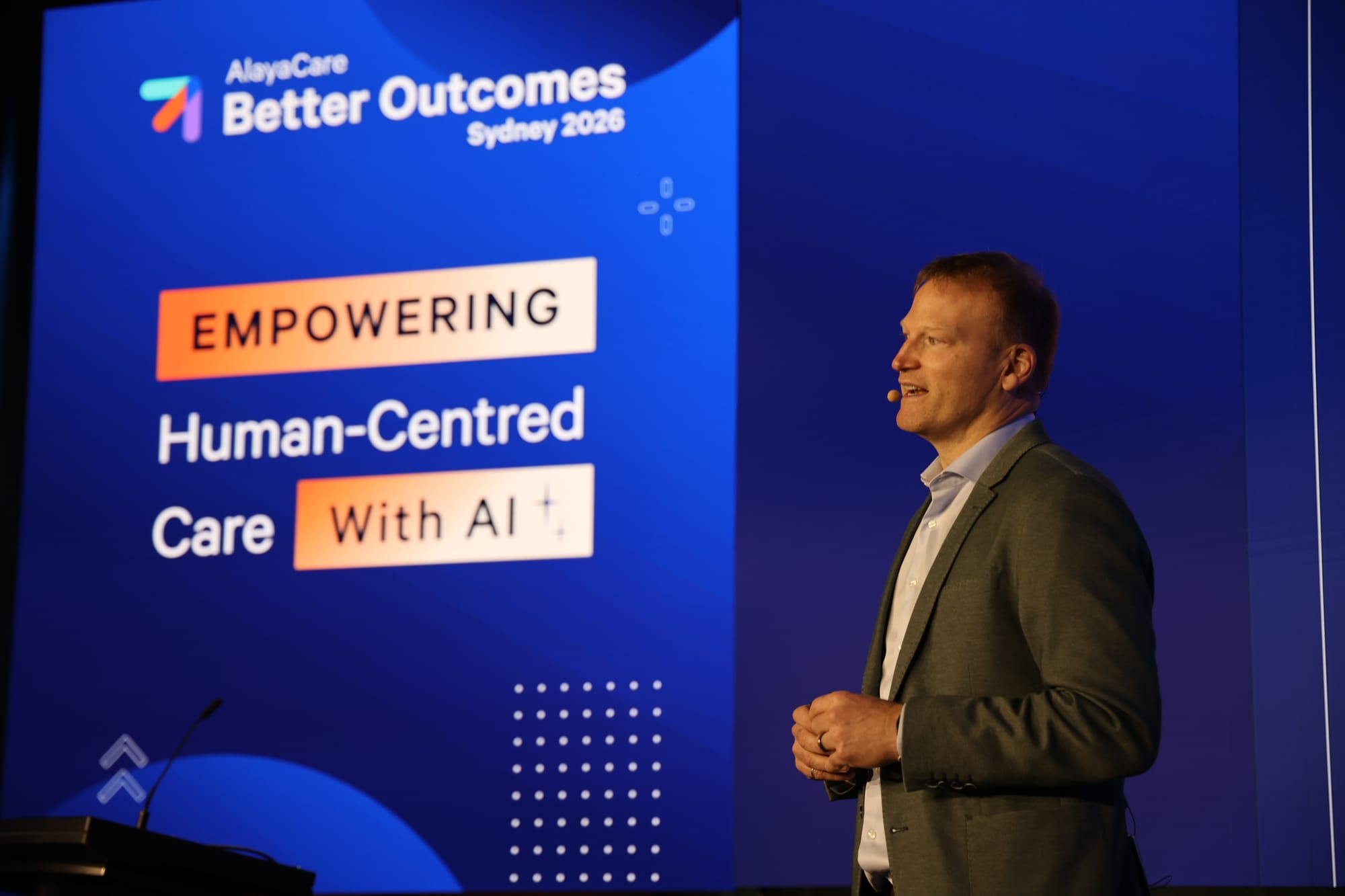
Adrian said providers globally are “squeezed for margin” as demand rises and wage costs increase faster than reimbursement rates.
“They’re trying to find a way to get as many dollars into frontline care as possible and minimise the overhead enabling those care interventions,” he said. “AlayaFlow is targeted at bringing efficiency to the back office and delivering full workflows.”
Scheduling, verification and care planning
The first three agents focus on Vacant Visit Scheduling, Visit Verification and Recommended Care Plans.
In a scheduling scenario, a vacant visit is detected, matched against staff availability and skill sets and offered to workers. The agent can then contact staff directly to confirm availability and progress through options until the shift is filled.
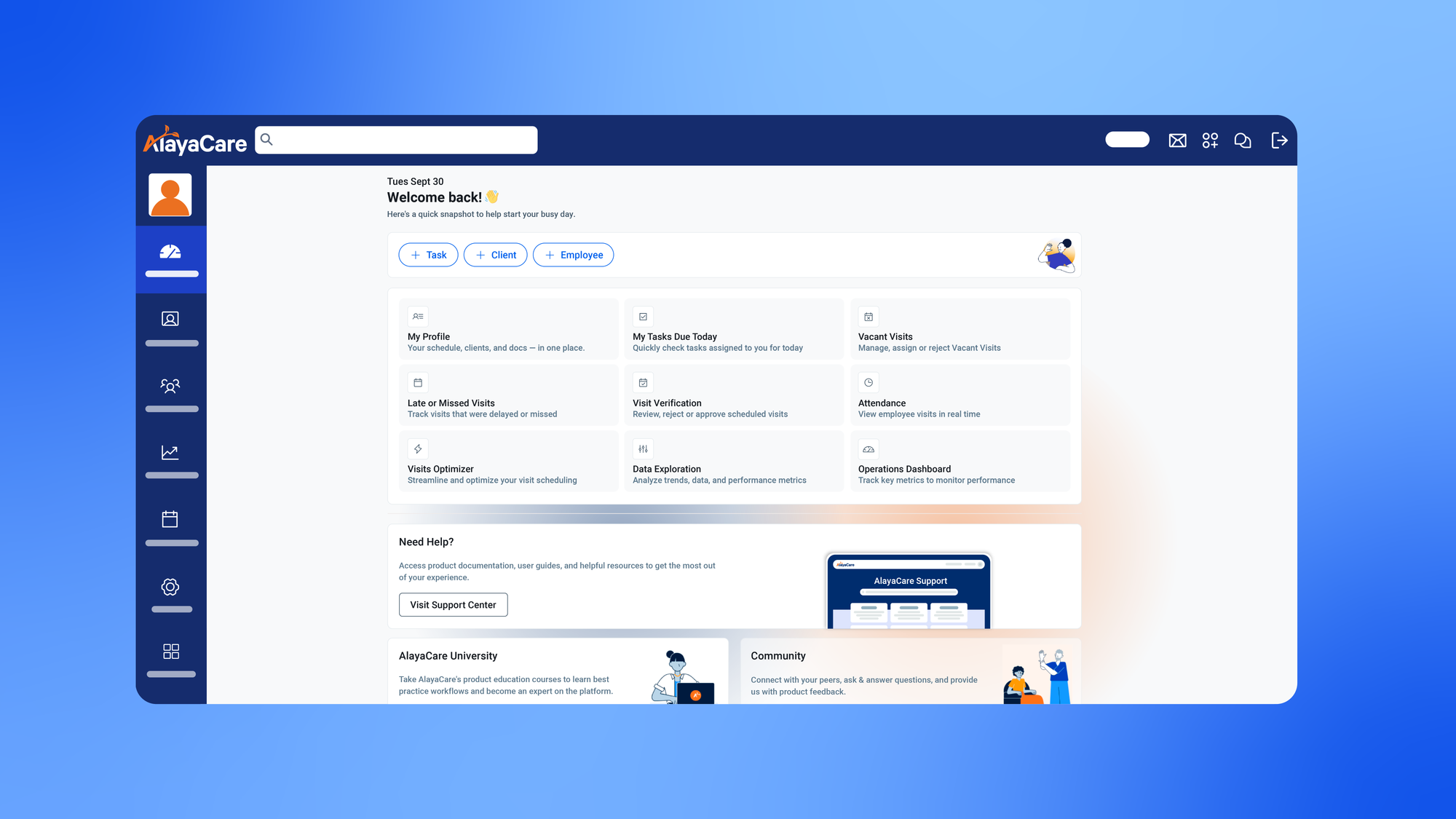
“It’s essentially doing what a scheduler would be doing, but just doing it quietly in the back end,” said Annette Hili, AlayaCare’s Managing Director ANZ.
The Visit Verification agent performs quality checks before billing confirming start and finish times, required documentation and clock-ins – resolving common problems automatically.
Meanwhile, the care plan agent uses demographic and clinical information from assessments, alongside a provider’s care plan libraries, to create a recommended draft plan for review by a clinician.
Adrian said early adopters in North America have reported documentation time reductions of up to 20% when using the AI-powered workflow.
“We have never seen market pull for a product like this,” he said, noting the rollout has been in stages as unusual scenarios are refined.
Outcome-based pricing
AlayaFlow will be priced separately from AlayaCare Cloud, using an outcome-based model.
“If it normally takes someone five minutes to fill a shift, we only charge if the agent successfully fills it – and at a fraction of the cost,” Adrian said.
The launch comes amid mounting margin pressure in home care, ahead of price caps set down for 1 July 2026.
Better Outcomes 2026 has brought together aged care and disability leaders to explore the future of care, with speakers including Dr Jordan Nguyen discussing responsible AI adoption.

Annette expects workflow automation to become essential as providers adapt to Support at Home.
“I don’t think providers will be able to do it without it,” she said. “We have to find efficiency as a sector – and use humans for what they should be used for: direct care, not admin.”


