All retirement village (and assisted living) operators need to teach Jim Chalmers mathematics
Village operators will have no choice but to source private home care, but who will pay for it and who carries all the risks associated with medically ill people on the premises?


The chart above is calamitous for older Australians, and retirement village operators. Jim Chalmers is walking away from home care.
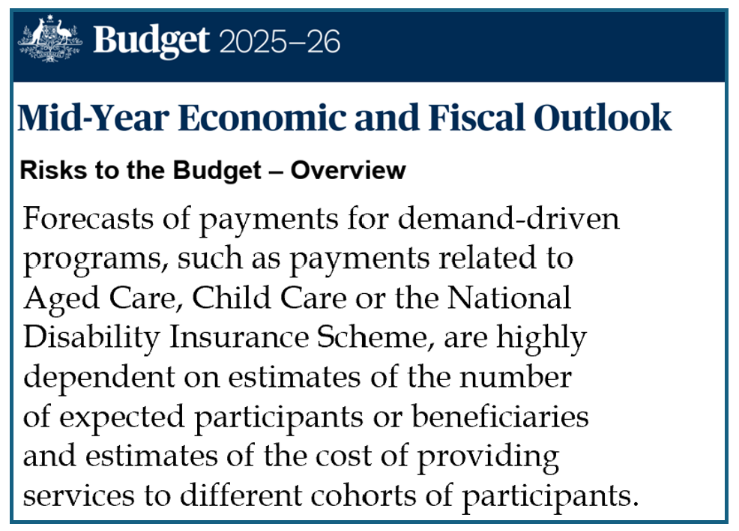
The chart is a clip from his Mid Year Economic & Fiscal Outlook (MYEFO) presented on 17 December.
It states the amount of new money that the Government is forecasting it will pay in the next four years to support home care in addition to current levels. He has obviously given up.
The first Baby Boomers hit 82 years of age – the average age of taking up a home care package – in 2028, when Chalmers is reducing the 2026 spend. But the Baby Boomers will add 30%+ to the average number of people calling for home care support.
Meanwhile today 230,000 people are waiting to be assessed or waiting to get a home care package.
20,000 new packages were commenced to be released last October and another 63,000 from July this year. That is 147,000 less that today’s number of people waiting. Before the Baby Boomer tidal wave, where another 130,000 put their hand up each year. By December the number waiting is likely to be 277,000 older, frail Australians. And the year after it will 407,000 people waiting.
Mr Chalmers FY26 and FY27 allocation of new cash totals $734 million. The average package is $30,000. So this new cash will deliver 24,466 packages against demand of 407,000.
And this doesn’t take into account the fact that all aged care beds are full.
People who would normally transition out of a package into residential care won’t be able to, and the people who normally go straight to residential care can’t, so they will look for a package instead.
This second group will be marked ‘urgent’ and so will get home care packages first.
For village operators and those residential care operators planning to pivot to assisted living under the Retirement Village Act, this is all a disaster. How to support people without packages.
At least 25% of all village residents will need Home Care Packages, but most won’t get Packages. 50%+ will develop dementia but only a few will get Packages.
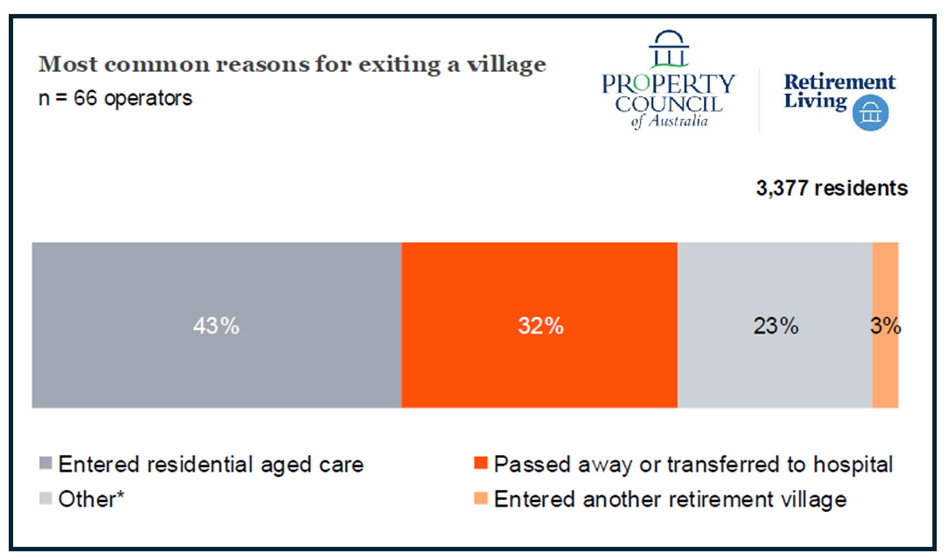
Pick a number, lets say 80% of village residents that should transition to residential care can’t. That is 43% of village resident departures are going to stay in the village, needing support, but not funded by the Government.
Village operators will have no choice but to source private home care, but who will pay for it and who carries all the risks associated with medically ill people on the premises?
Jim, mate, and village operators, the maths don’t lie. And many are seeing this catastrophe unfolding now.
The answer: Chris Blake and the LEADERS SUMMIT

There are answers and ways forward. The person with the most at risk in their business and who is acting now, is Chris Blake, CEO of St. Vincent’s Health Australia. With hospitals, villages, care in the home and residential care, he is pivoting half his 30,000 staff to be in people’s homes delivering support and care by 2030.
Chris is speaking at the LEADERS SUMMIT.
So is Robert Read, CEO of Amplar Health, today the largest Hospital in the Home provider and owned by Medibank.

Plus Natalie Siegel-Brown, the Inspector General of Aged Care, who has big ideas on transforming the ageing system.
Jim’s maths don’t lie and the demographic maths don’t lie; they just don’t match up and every operator needs to fully comprehend this now, as new contracts with new village residents are being signed. These contracts are likely not to work within the next 36 months, or less.
We invite you, and Jim Chalmers, to the LEADERS SUMMIT. Learn more HERE.