
Budget blitz: Aged care enters its no-money winter


We said it in December – aged care is entering a no-money decade. Now the pre-Budget mood music from the fiscal gatekeepers suggests May will confirm it.
The Sydney Morning Herald reported on Wednesday Prime Minister Anthony Albanese has ordered ministers to find “significant savings” ahead of a belt-tightening Budget.
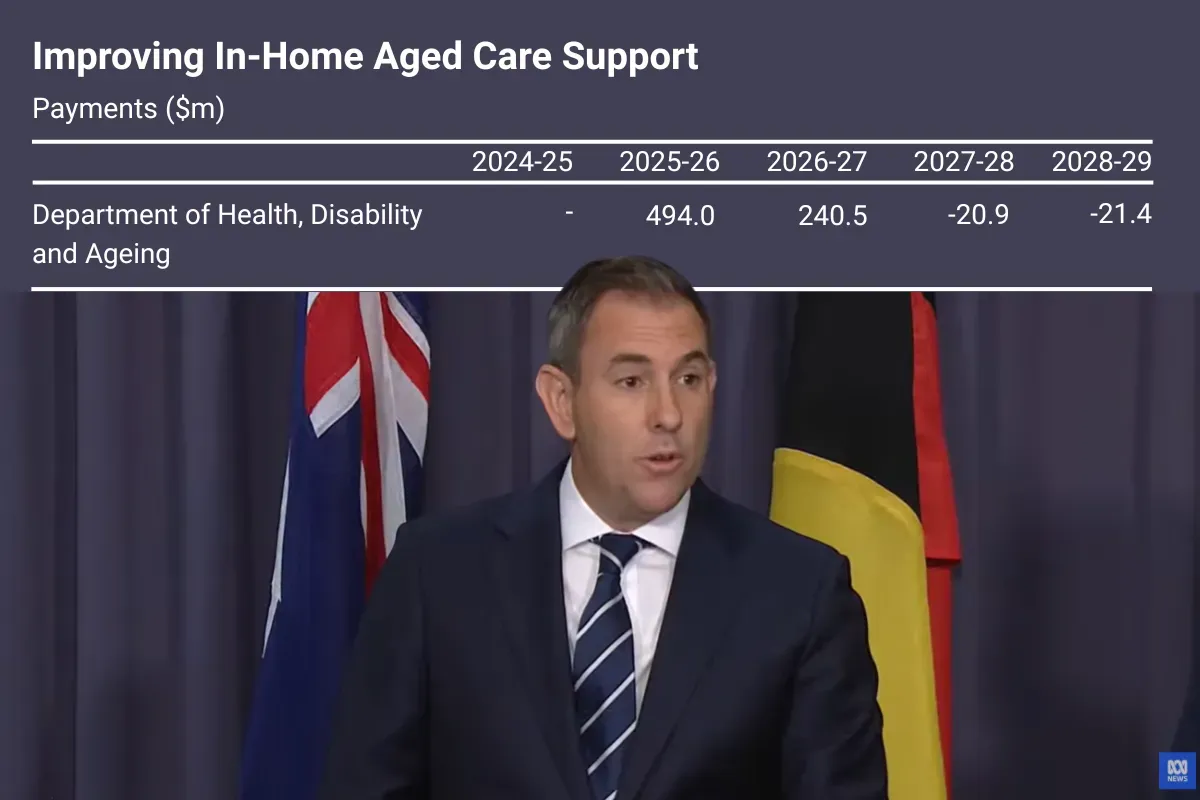
Buried in the article was the line aged care leaders may have noticed: the cash injection needed to fulfil Labor’s promises to fix the system “may not be available all at once”.
Translation: don’t expect a cavalry charge of new funding.
This simply confirms what MYEFO 2025-26 already forecast. Federal government spending is sitting at 26.9% of GDP – the highest level since the mid-1980s outside of the COVID-19 pandemic – while gross debt is edging towards $1 trillion.
A new report by independent research institute e61 warns of 20 consecutive years of combined Federal and State deficits.
Yet demand is exploding in plain sight.
Around 60,000 Australians turn 80 every year. Hospitals are bracing for winter. Operators and advisers this week are openly worried about capacity – in emergency departments, in sub-acute beds, in residential aged care and in home care.
We are being asked to tighten belts at the exact moment demographic pressure is peaking.
So what does this mean for aged care?
First, the obvious: providers cannot rely on fresh Federal Government money to save them. Beyond what is already budgeted, extensive new funding looks unlikely.
Second, productivity and reform are no longer optional.
If there is no new river of cash, the only levers left are efficiency, innovation, prevention and private contribution.
Plan T: Productivity is not optional
This is where Plan T – Transformation – comes into play.
If the sector is to survive – and thrive – productivity must lift. That means identifying unnecessary activities and promoting productive ones. It means stripping out duplication between health and aged care and attacking the back-office blowout and compliance inefficiencies that are quietly eroding margins.
We reported this week on AlayaCare’s new agentic AI platform, which is already delivering a 20 per cent reduction in documentation time for some home care providers. That is not a tech headline – it is margin protection in action.
If we can deliver these cost savings, it will help improve the sector’s investability – essential if we want to build more beds and refurbish existing stock.
Governments also have a role to play. If they want 10,000 new beds a year, they need to clear capital roadblocks – planning delays, regulatory uncertainty and greater flexibility in accommodation pricing. Otherwise the sector will not build at scale.
Prevention and private contribution
And then there is prevention – the lever everyone agrees with and few fund properly.
If you could delay entry into aged care by six months, the domino effect on hospital demand and aged care capacity would be enormous.
The ingredients are hardly groundbreaking: physical activity, nutrition and tackling loneliness. But prevention sits awkwardly between State health budgets and Federal aged care funding, given the payoff can take years to emerge. So it remains underdone.
In a no-money decade, that thinking has to change.
Finally, we need a serious conversation about consumer contributions. There is wealth in the system. Many older Australians can afford to contribute more to their own care – particularly to secure timely access and higher-end services.
As we have consistently argued, a strong safety net must remain. But pretending everyone is asset-poor does not solve a trillion-dollar fiscal problem.
The May Budget is shaping up as a “tough times” Budget.
For aged care, the question is not whether money is tight – it is whether the sector uses this moment to transform or waits for funding that may never come.


