
Choose your lane: why assisted living is the future for retirement village operators
With the Baby Boomers set to dominate Australia’s ageing population in the next few years – and fewer nurses available – the future of care will be focused in accommodation that bridges the divide between retirement villages and residential...


With the Baby Boomers set to dominate Australia’s ageing population in the next few years – and fewer nurses available – the future of care will be focused in accommodation that bridges the divide between retirement villages and residential aged care. Operators should re-think their strategies now.
With the new Aged Care Act shifting the system towards more privately paid services, Baby Boomers will have to pay more – will they want the traditional institutional RAC models of aged care?
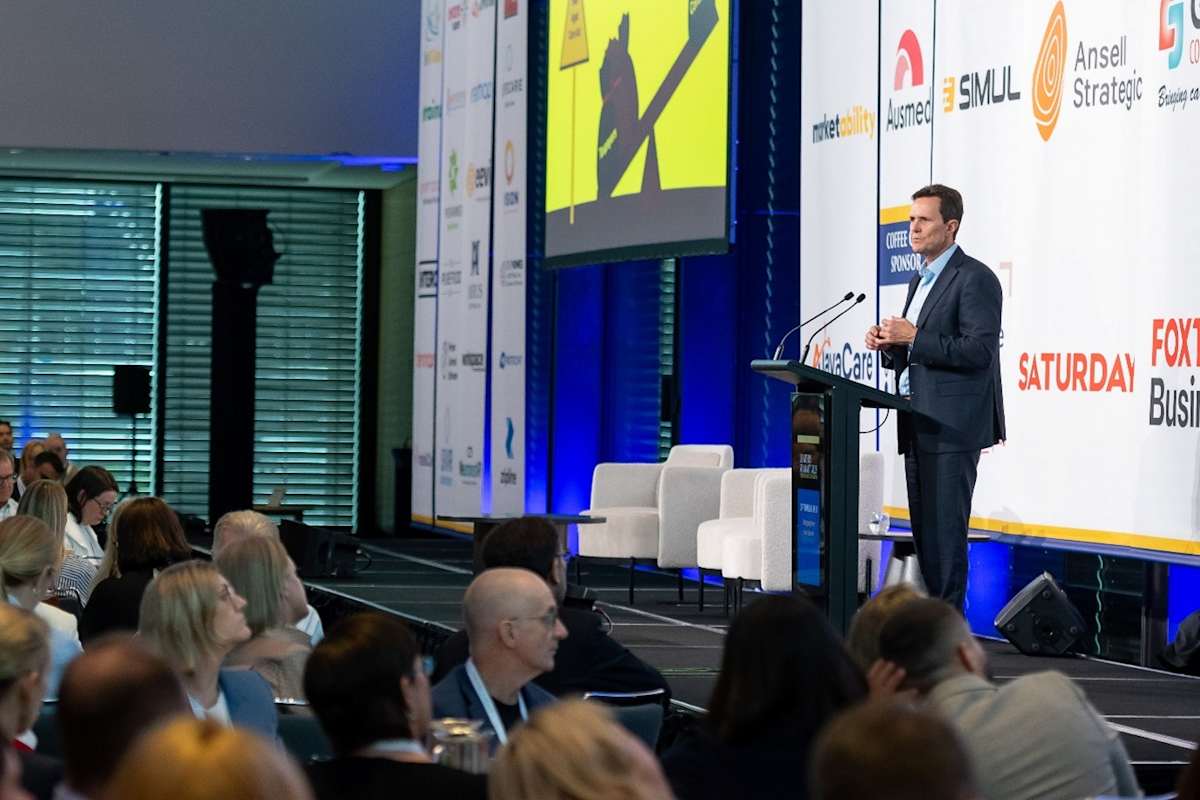
The answer is no, according to Cam Ansell (pictured above), the Managing Director of aged care and retirement living advisory firm Ansell Strategic. Addressing the audience at the 2025 LEADERS SUMMIT, Cam pointed to a major shift that is set to happen as the Builder generation begins to transfer their wealth to their already-wealthy Baby Boomers and Gen X children.
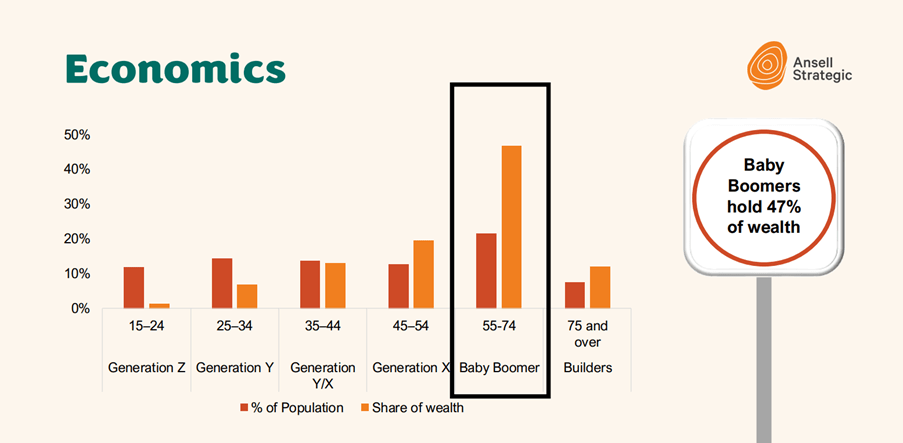
With aged care contributions now split between clinical care and non-clinical care in residential aged care, consumers will take on a growing responsibility of funding their own accommodation and daily living services as taxpayer funding becomes more strained. With the cost of capital for new aged care beds at a premium – and older people more inclined to stay at home – Cam argued “the future is all home care” – just in different locations. See below.
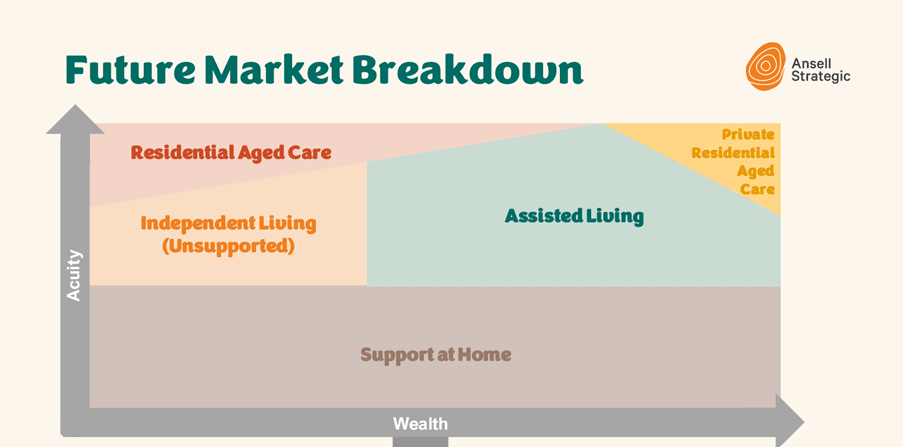
Operators therefore need to consider the customers that they want to service, including key metrics such as:
- Acuity levels – what is their requirement for clinical support?
- Cognitive impairments – what are their needs in terms of dementia support?
- Personal wealth – many Baby Boomers have considerable wealth but there is also a large cohort without financial means
- Subsidy availability – how much will the Government contribute towards care costs?

Accommodation-only villages to see dip in popularity
While better technology will enable remote monitoring and virtual consultations for people living at home, persistent workforce shortages will require many older Australians to move to environments that are purpose-built for their increasing frailty over time, said Cam. While he believes there is still room for growth in retirement villages, Cam forecasts a dip in popularity for those operators that deliver only accommodation. “From about 2033, our modelling indicates that it’s more likely that the numbers are likely to decrease,” he stated.
“The ability to be able to get DMF entry contributions for people will lessen, and therefore the likelihood of people going into this option will do so because of a lack of choice and a lack of wealth.”
Although 60% of new retirement village developments are co-located with residential aged care, having a facility on-site is also no longer a prerequisite for delivering a continuum of care, Cam added. “In some areas in New Zealand, a lot of the redevelopment work that we’re working on is collapsing the size of the residential aged care services,” he said. “Because on average, when you have 200 units, if you have a residential aged care service that’s been built to scale so 100 beds or more, the majority of the people in that facility did not come from that village.”
Assisted living set to thrive
Instead, Cam forecasts that the growth will be in ‘care homes’ – continuum of care villages and assisted living services for those people who cannot live at home but don’t yet need residential aged care. Known as ‘assisted living’ in the United States and ‘care homes’ in the UK, these models will operate largely outside of residential aged care funding models and their attached regulations, including care minutes, reporting and liquidity requirements. Aged care beds will be in demand – but Cam stressed the need for the model to evolve.
“Most of our investment in residential aged care won’t be in new ones. It will be on rebuilding the ones that we have and making them better for people at high acuity,” he underlined.
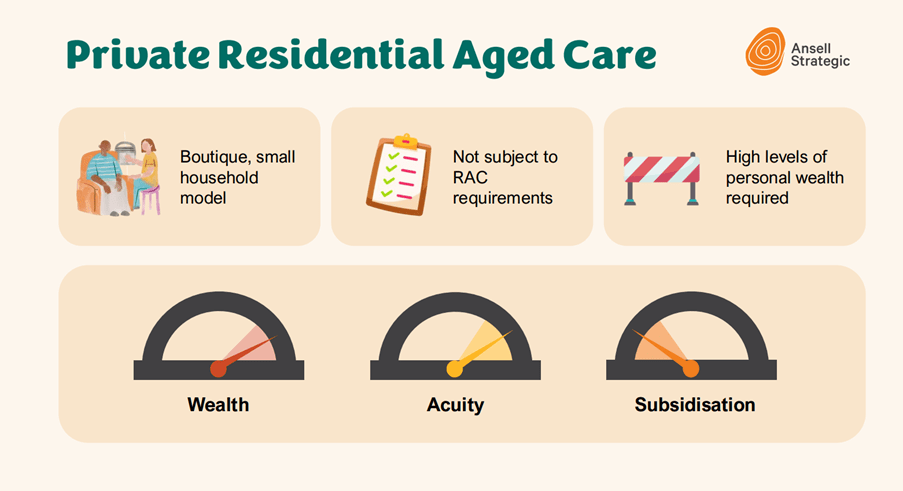
As residential aged care becomes more inaccessible with demand, and expensive, care homes and retirement villages will provide substitute services and defer or avoid the need for a RAC for the majority of Baby Boomers. Private residential aged care – like the models operated by LDK Seniors’ Living and Odyssey Lifestyle Care Communities – will become a mainstream offering within the next 10 years, he predicted.
The message?
Operators need to make strategic decisions about where they want to be in the future, focusing on their strengths and the services they want to provide. “The most successful operators that we’re working with, those that are that are building their plans, are looking at this model (assisted living or care homes),” summed up Cam.
“They will make a decision about where it is that they want to be in that trajectory and what services that they want to go into, and they will choose a lane that represents their ambition and their strength moving forward.”


