
Home care push as 3,000 older Australians remain stuck in hospital


A partnership between provider Prestige Inhome Care and Sunshine Coast health charity Wishlist is highlighting the role home care can play in helping hospitals discharge patients sooner.
Pressure on hospitals is increasing as older patients wait for aged care services, with over 3,100 older Australians currently stuck in hospital waiting for aged care.
At the same time, access to Government-funded home care remains constrained, with hundreds of thousands of older Australians waiting for assessments or the correct level of support.
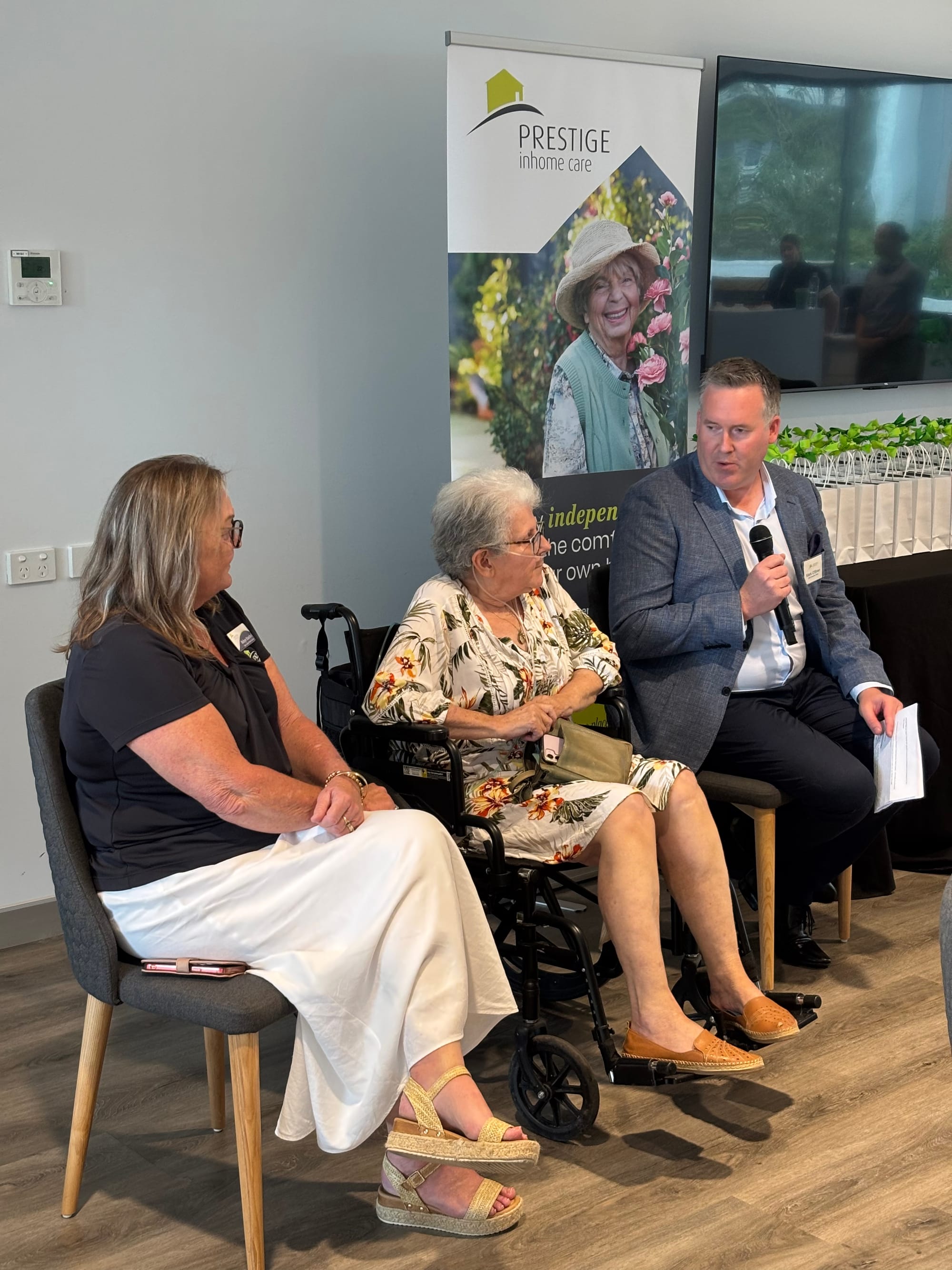
The initiative was discussed at a community event held last month at the Wishlist Centre, where executives from both organisations outlined how coordinated discharge planning and in-home support can reduce unnecessary hospital stays.
Prestige Inhome Care CEO Mark O’Brien said the partnership aims to address a persistent gap between hospital discharge and the support patients need once they return home.
“Across the healthcare system we repeatedly see patients remaining in hospital longer than necessary due to a lack of coordinated support at home,” Mark said.
“Families are often unsure what options exist outside the hospital or rehab environment, and hospitals are under pressure when many patients are clinically ready for discharge.”
Planning begins before discharge
Under the model, planning for in-home recovery can begin while the patient is still in hospital.
Prestige works with discharge planners and clinical teams to assess the patient’s needs and develop a care plan that may include personal care, nursing support, equipment and home modifications.
“The aim is that by the time they walk through their front door, everything is already in place so their recovery can continue seamlessly at home,” Mark said.
Who the model supports
The approach targets patients who are medically stable but still require short-term assistance following discharge.
This can include older patients, people living with complex or multiple conditions, or individuals who need support to regain independence after a hospital stay.
Patients who still require intensive inpatient rehabilitation, high-dependency care or ongoing clinical monitoring may remain in hospital or specialist rehabilitation settings.
Access to support
Prestige said private home care services can be arranged within 24-48 hours, including for patients who do not yet receive Government-funded home care.
In those cases, patients can access private in-home support while applying for funding under the Support at Home program.
However, accessing Government-funded home care remains difficult for many older Australians.
Nearly 350,000 older Australians waiting on home care
Figures released during Senate Estimates in February showed 4,812 older Australians died waiting for appropriate home care in 2024-25, according to the Department of Health, Disability and Ageing.
Nearly 350,000 older Australians are currently waiting for care at home, either for an aged care assessment or to receive the correct level of Support at Home funding.
As at 31 December 2025, 131,366 people were waiting for the correct Support at Home package, including 94,463 who had no funding in place at all.
Mark said expanding awareness of in-home recovery options and improving coordination between hospitals and home care providers could help address both hospital congestion and the growing backlog of Australians waiting for care at home.
“What’s needed now is broader awareness, consistent referral pathways and ongoing investment in community-based care,” he said.


