
Is this the canary in the coalmine for home care?


The arrival of 60% Interim Packages under Support at Home is more than a teething problem – it is a signal.
A signal that the Government does not have the cash to fund the system it has designed – and that the sector will soon be asked to openly educate older Australians and their families about paying for their own care.
As we report in this edition, providers are reporting that most new clients are being approved at 60% funding. On paper, the policy achieves two things. First, Canberra can say it has met its target of releasing 83,000 new Packages this financial year. Second, it keeps the Budget firmly in check.
But the numbers behind that decision are sobering.
As foreshadowed in the Mid-Year Economic and Fiscal Outlook, home care funding turns negative from 2027-28 – largely through “tighter targeting” and the reprioritisation of unspent funds.
In short: the money isn’t there.
Demand is inexorable
Stephen Rooke from Pride Aged Living recently shared a chart that should be pinned to every boardroom wall – see below. Using ABS data, his model suggests we need roughly 40 beds or Packages for every 100 people aged 80-plus to meet demand.
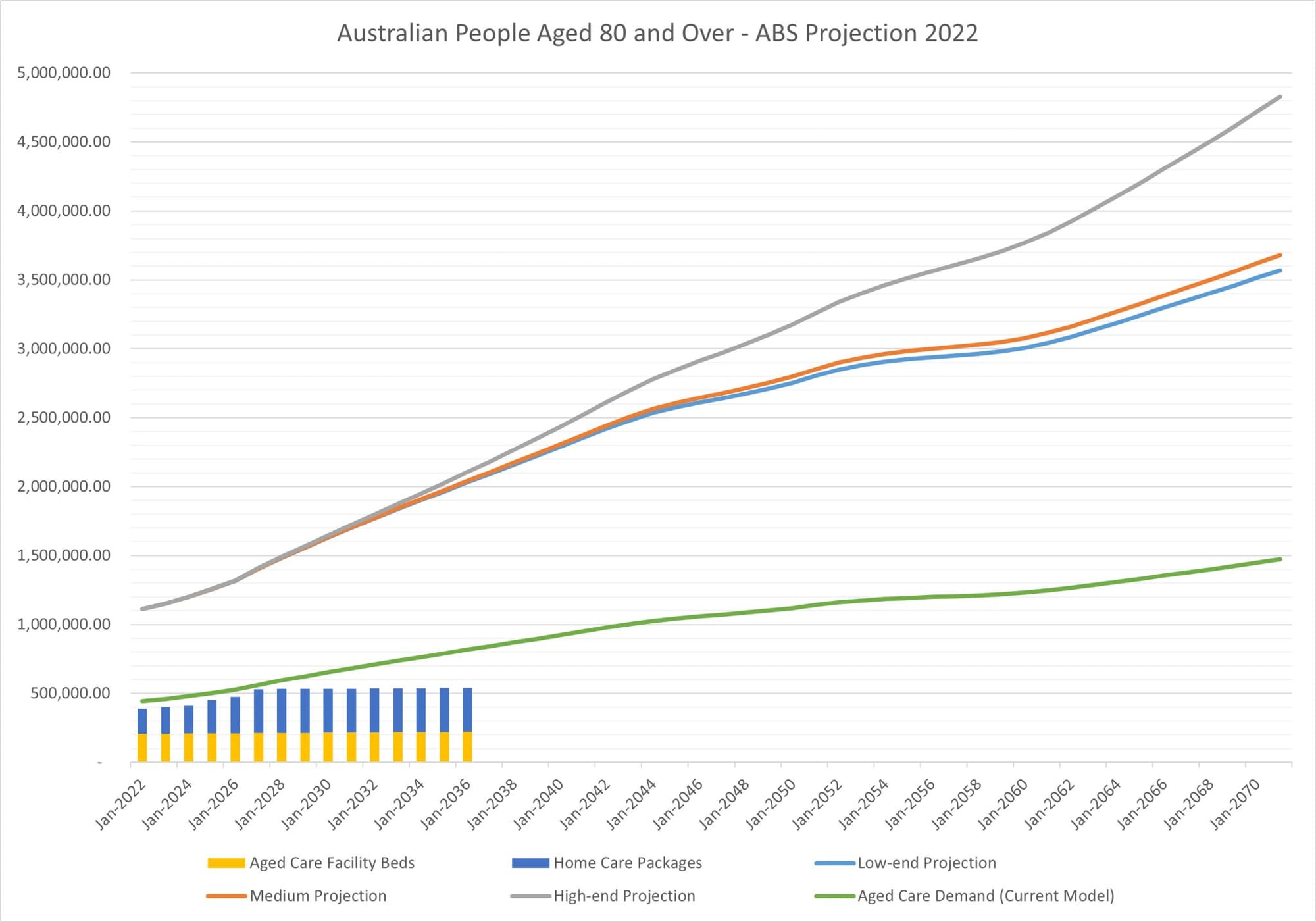
Even at that conservative midpoint, the gap between supply and need is already widening. By 2035, the shortfall reaches at least 250,000 places – about 25,000 extra services every year.
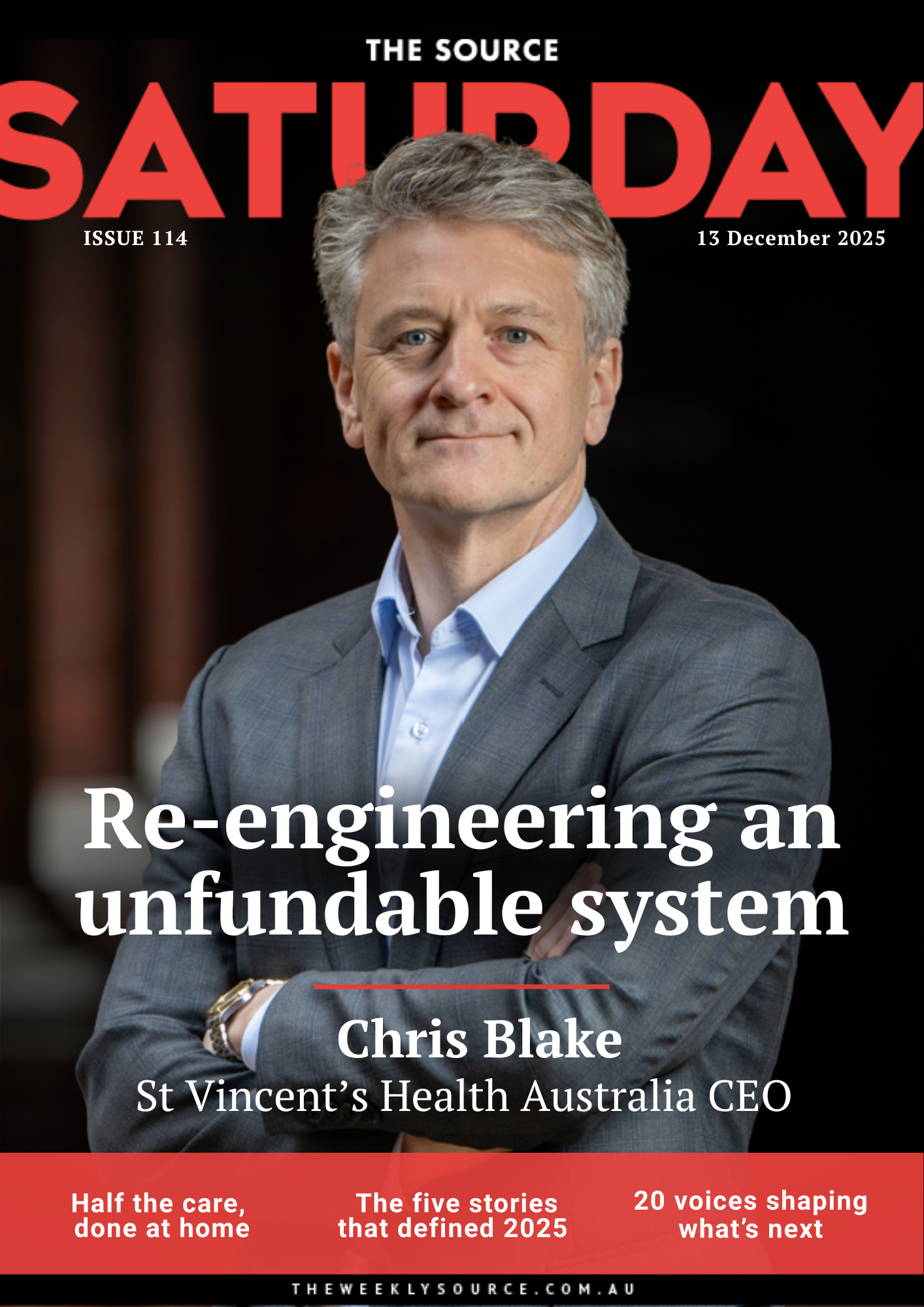
At the same time, policy is steering care swiftly into the home. St Vincent’s CEO Chris Blake put it bluntly: on current settings the system is “unfundable within five years”.
“Demand is rising faster than funding can ever keep up,” he told SATURDAY.
Add defence, disability, hospitals and interest on Government debt, and the fiscal squeeze becomes obvious.
Luke Yeaman, Commonwealth Bank’s Chief Economist – a former Deputy Secretary of Treasury who has advised Governments, Prime Ministers and the G20 on economic issues – will outline at the 2026 LEADERS SUMMIT how four macro disruptors could reshape Australian business over the next decade. Aged care sits firmly in the middle of that storm.

What does this mean?
It means there will never be enough public funding to give every older Australian the level of service they need and expect.
The next five years will demand a hard reset in how care is financed. Of course, a safety net must always be in place for those without means. But the idea that Government alone will fund your aged care is being pulled apart by necessity.
Providers are already being left to tell clients they have only 60% funding. The education task – explaining co-contributions, prioritising services, resetting expectations – will fall to the sector by default.
We also need an honest conversation about using household wealth, particularly the family home, to fund care.
Envigor CEO Nick Loudon has proposed that the Federal Government develop a scheme modelled on the Pension Loan Scheme, allowing older Australians to draw on the value of the family home to fund Support at Home, with access secured against property and quarantined for assessed care needs.
Ideas like this must be considered.
The cost of delay
Operators are seeing the consequences now: deferred services, burnt out carers, and older people presenting sicker and more complex.
If we wait, that will become the norm.


