
Post-ACAR aged care opens door to innovation: UARC
With places now allocated to older people, UARC says providers have greater freedom to plan the scale, location and design of new developments.


The latest report from the UTS Ageing Research Collaborative (UARC) says the removal of bed licences and Aged Care Approvals Rounds (ACAR) has created new opportunities for innovative providers – including retirement village operators – but exposed new risks around access and productivity.
The 135-page eighth edition of UARC’s Australia’s Aged Care Sector Report (Full-Year Report 2024-25), released on Monday, 15 December, confirms ACAR and bed licences formally lapsed with the commencement of the new Aged Care Act on 1 November, ending decades of supply controls that restricted where and how providers could operate.
With places now allocated to older people rather than providers, UARC says registered providers have greater freedom to plan the scale, location and design of new developments.
In particular, the report notes that retirement village operators can now offer residential aged care, opening a new competitive pathway for capital-backed and design-led models. However, the report warns that deregulation also carries access risks.
The end of minimum supported resident ratios, previously tied to Aged Care Planning Regions, means some providers may choose to limit places for lower-means residents – an issue that is already emerging given the high occupancy across the sector.
UARC says provider behaviour in the post-ratio environment will need to be closely monitored to ensure access and affordability are not eroded.
Interestingly, UARC identifies productivity as the next defining challenge for aged care.
The report introduces ‘Productivity Plus’ as an ongoing theme, arguing that reform must now shift from compliance with inputs toward improving outcomes per dollar and per worker – a problem given the focus on care minutes in residential aged care.
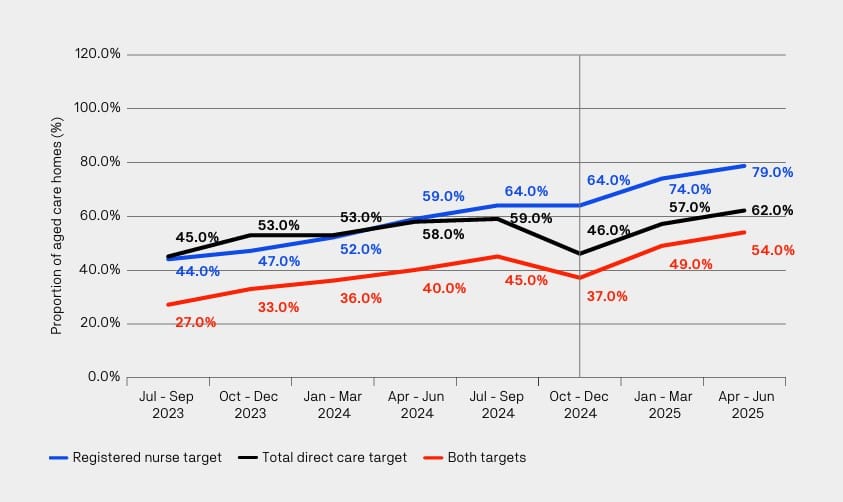
With demand for care services growing rapidly while the number of Australians in the labour force continues to decline, UARC says productivity gains – through scale, technology, service redesign and more effective models of care – will be essential to long-term sustainability.
As Professor Mike Woods (pictured top right), Chair of UARC, notes in the report, the new regulatory environment offers real flexibility – but success will depend on whether providers use that freedom to innovate responsibly, rather than simply grow their margins.
You can read the full report here.


