
Private versus Not For Profit: which has the smallest gender gap?
Meet the Top 10 largest aged care operators with the smallest gender pay gaps – and most are led by men. Half of Australia’s largest aged care providers with the lowest gender pay gaps are For Profit operators – and eight of the 10 are led by...


Meet the Top 10 largest aged care operators with the smallest gender pay gaps – and most are led by men.
Half of Australia’s largest aged care providers with the lowest gender pay gaps are For Profit operators – and eight of the 10 are led by male CEOs, according to new data from the Workplace Gender Equality Agency (WGEA).
What is the Gender Pay Gap (GPG)?
The Gender Pay Gap (GPG) measures the difference in average earnings between men and women in the workforce, expressed either as a percentage or a dollar amount of men’s earnings. For example, if an organisation’s GPG is 15%, it means that, on average, men earn 15% more than women. The Workplace Gender Equality Agency (WGEA) considers both the mean GPG – the average across the dataset – and the median, which represents the middle value. The median is particularly useful when analysing the GPG, as it helps eliminate the impact of extreme high or low data points that could distort the mean. The WGEA classifies employers with a pay gap of 5% or more as favouring men. A gap of less than -5% indicates a preference for women, while a gap between -5% and 5% is considered neutral.

Which are the Top 10 largest operators with the lowest pay gaps?
See below.
TLC Aged Care
Leading the pack is the private aged care provider TLC Healthcare, led by our cover CEO Lou Pascuzzi (pictured above), with an impressive -8.4% average total remuneration gender pay gap and a median of -0.9% for the 421 staff at its 12 aged care homes across metropolitan Melbourne and Geelong.

Wesley Mission QLD
The Not For Profit, steered by CEO Jude Emmer (pictured), achieved a -6.7% average total remuneration gender pay gap and a median of -2.5% for the 3,204 staff across its 13 residential aged care homes, three retirement villages, 14 specialist disability accommodation facilities and two hospices.
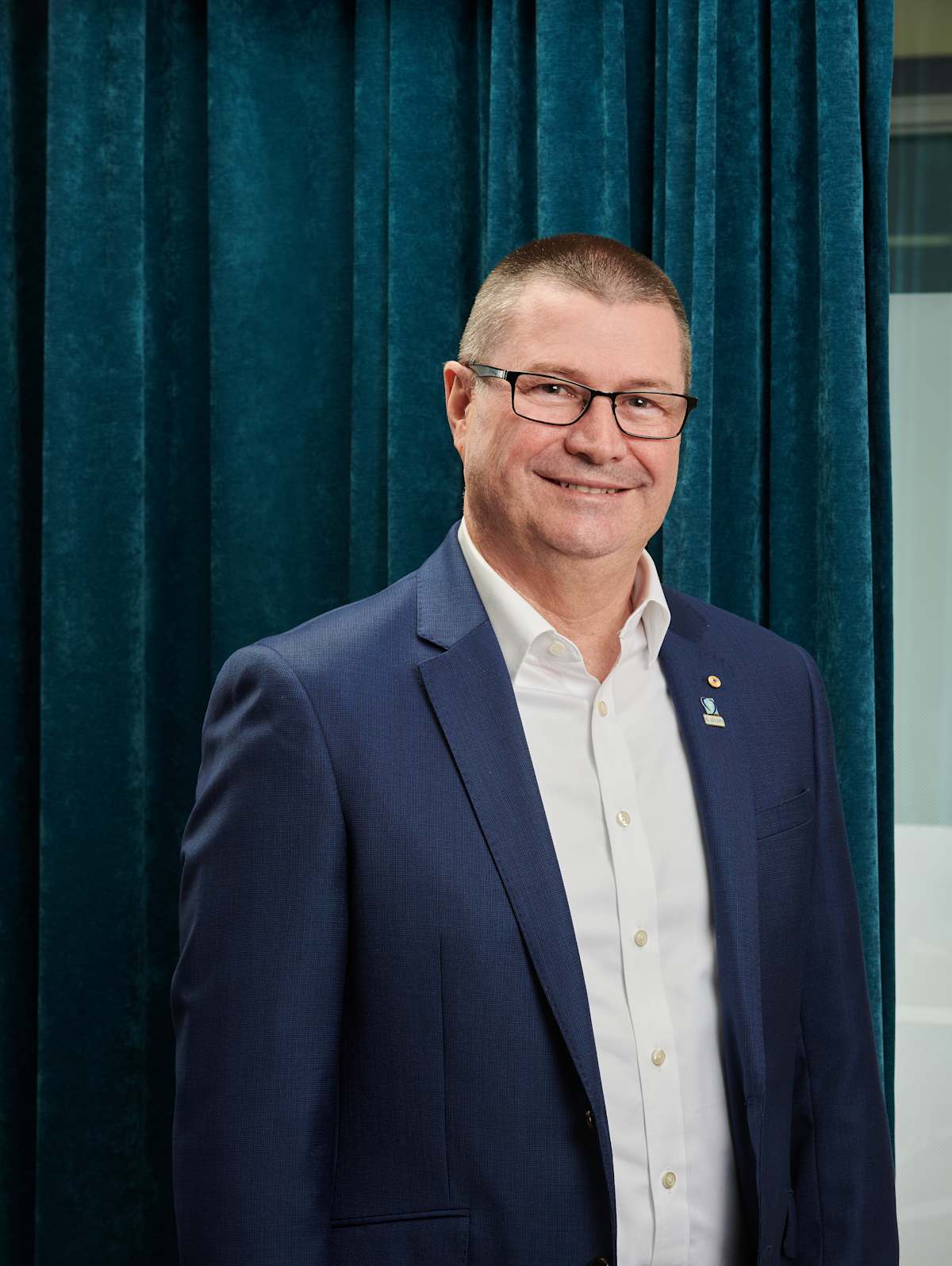
Calvary Health Care
The Catholic health, home and aged care provider, which is led by retiring National CEO Martin Bowles (pictured), performed strongly too, with an average total remuneration gender pay gap of -5.7% and a median of -2.8% for the 1,422 staff at its 57 aged care homes and 17 retirement villages.
Australian Unity’s Home Care

The mutual fund’s Home Health division, headed up by CEO Prue Bowden (pictured), recorded a -1.9% average total remuneration gender pay gap and a -1.4% median for its 3,520 home care staff who service around 25,000 clients.

St Vincent’s Care Services
Australia’s largest Not For Profit provider of health and aged care services, guided by CEO Lincoln Hopper (pictured), had an average total remuneration gender pay gap of -1.4% and a -0.3% median across the 3,878 employees at its 26 aged care homes.

Aegis Aged Care
The family-run West Australian operator, led by owner and CEO Michael Cross (pictured far right), registered a -1.1% average total remuneration gender pay gap and a -1.2% median for the 4,601 staff across its 30 aged care homes in Perth.
Thompson Health Care
Another family-run operator, Thompson Health Care, founded by Doug Thompson AM (pictured left), scored an average total remuneration gender pay gap of -0.8% and a 0% median for the 2,334 staff employed across its 16 aged care homes in Sydney and the NSW Central Coast.

Blue Care
An agency of UnitingCare, the health and community arm of the Uniting Church of Queensland, which is helmed by outgoing CEO Craig Barke (pictured), had a 0% average total remuneration gender pay gap and a median of -1.1% for the 8,510 staff across its 88 aged care homes and retirement villages.

Arcare
Owned and operated by the Knowles Group and managed by CEO Colin Singh (pictured), Arcare recorded an average total remuneration gender pay gap of 0.1% and a median of -1.2% over the 10,637 staff at its 50-plus aged care homes.

Bupa Aged Care Bupa’s aged care arm, overseen in Australia by Managing Director, Andrew Kinkade (pictured), notched up a 0.2% average total remuneration gender pay gap and a median of -0.8% for its 7,631 employees at its 70 aged care homes.

Uniting AgeWell
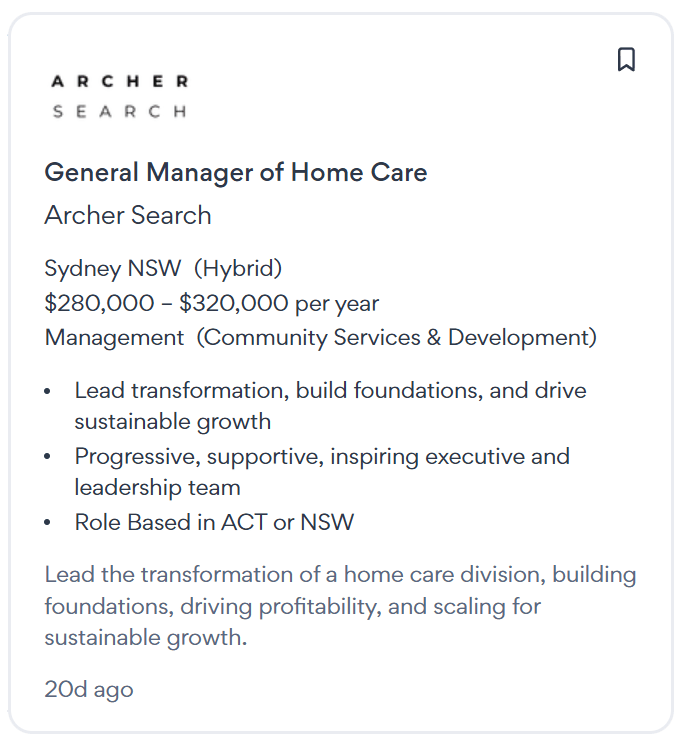
The Not For Profit, which has 20 aged care homes in metropolitan and regional Victoria and Tasmania under CEO Andrew Kinnersly (pictured), had a 0.7% average total remuneration gender pay gap and a median of 1.6% for 4,031 staff. What does this tell us about the sector? Whether the leaders of an organisation are male or female, operators are willing to pay for talent – and are prepared to pay more to grow their businesses. You only must look at some recent ads for jobs in the aged care sector to see this in action. Check out the below from a search of aged care manager jobs based in Sydney.
Supporting wage equality – and paying people what they are worth – is a mission that is being taken on by all leaders in the sector.


