
The money isn’t coming – now what?


The message from the 2026 LEADERS SUMMIT was blunt – the money isn’t coming. With budgets under pressure, aged care can no longer assume funding will follow demand – it has to prove the case.
Chief Economist and Head of Global Economic & Markets Research at the Commonwealth Bank, Luke Yeaman, set out the Government’s forward position and what it means for ageing support.
His message?
Australia has moved into a more volatile, capital-constrained era. Spending is stretched, deficits are embedded, and competing priorities – defence, the NDIS, housing – are intensifying.
Aged care is no longer the only call on the public purse.
At the same time, the sector is entering a period where demand will surge, expectations will rise, and funding will not keep pace. This is the reality facing both the sector and Government.
With years spent inside Treasury and the Prime Minister’s orbit, Luke understands what Governments can absorb – and what they can’t.

Government understands the problem – but that doesn’t mean it will fund the solution.
For providers, that changes the equation.
Historically, the sector has focused its advocacy efforts on securing more funding. In this environment, the focus shifts to what can be demonstrated with existing resources – and how credible that case is when it returns to Government.
If we want more funding, we have to better use what we have first – and prove that more is required.
From funding to proof
This is where the sector must turn to productivity and innovation.
As Bolton Clarke’s Tim Hicks put it at the SUMMIT, the system is now spending more per person, but “consequently we cannot afford to support everyone that needs it”.
That trade-off between access and quality leaves one option: “find ways to lower costs without compromising standards.”
That is no longer optional.
For years, operators have argued – correctly – that the funding model has constrained performance.
StewartBrown Senior Partner Grant Corderoy has been one of the most consistent voices on this, pointing to the gap between costs and returns and the need to restore investability.
But even he is reframing the challenge.
“We cannot wait for the government to change the settings,” he told the audience. “Providers now have the opportunity – and must take the opportunity – to change.”
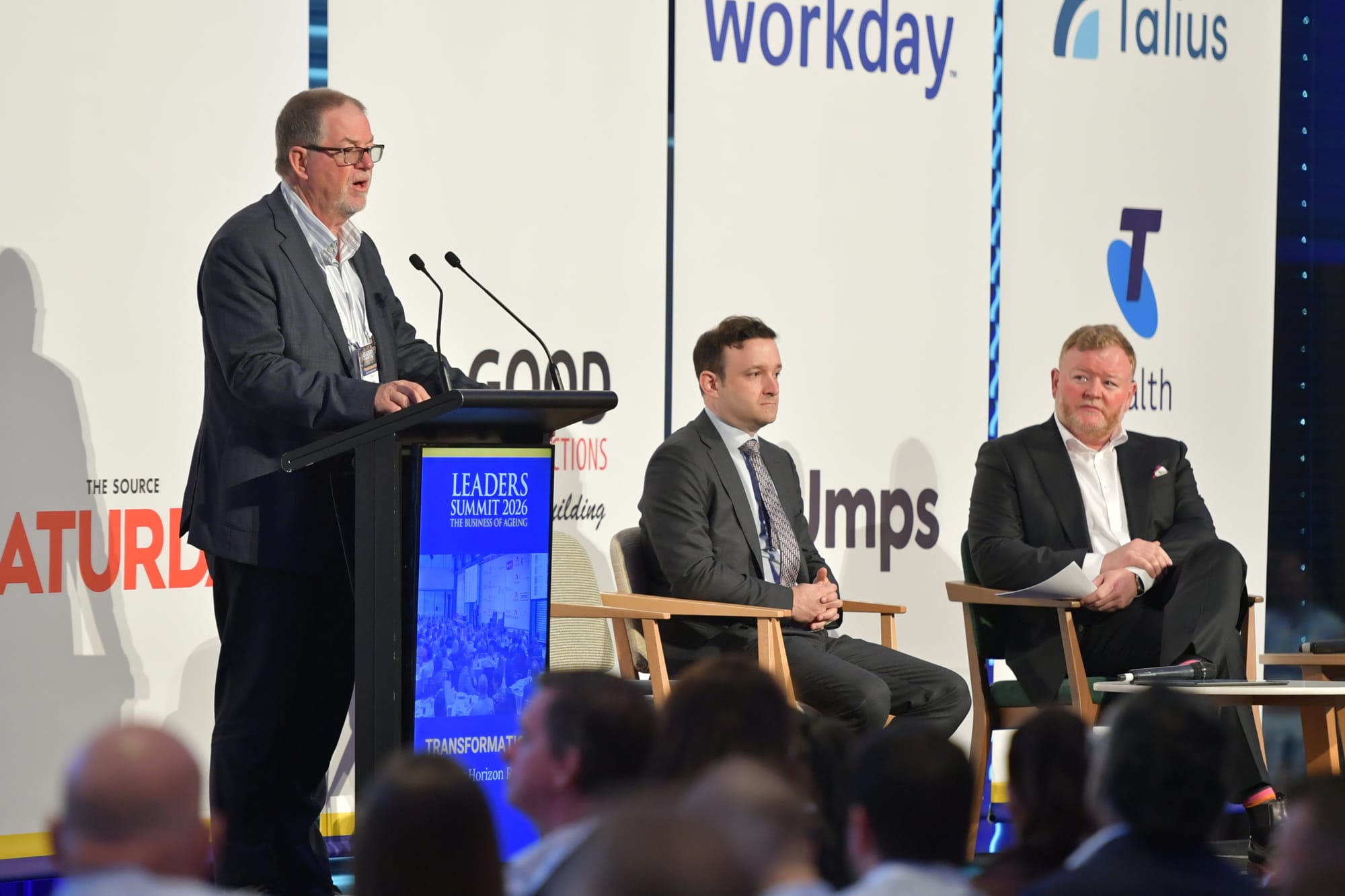
The new Aged Care Act has set the framework, but it will not fix the operating model.
Plan T and the shift to solutions
This is where Plan T lands – not as another reform agenda, but as a test of whether the sector can solve its own problems.
Providers already understand where inefficiencies sit. The challenge has been turning that insight into something Government can act on.
That is the gap that Plan T is trying to close.
And it aligns with what Luke made clear Governments are looking for. In a constrained environment, Ministers are not just fielding requests for funding – they are looking for sectors that can demonstrate efficiency and a willingness to partner.
“They’re craving solutions,” he said.
A different case for funding
Funding must remain part of the conversation – demand will ensure that.
But it is no longer enough to say the system is under pressure. The sector must show what it has already done – and where additional investment will deliver real return.
Grant put it bluntly: transformation will require “courage” – and the sector must lead the work.
The message is simple.
We can’t wait for more reform. We have to lead it – because if we don’t, no one else will.


