
2017 revisited – the irony of Victoria’s proposed retirement village code


- Industry-led: Voluntary standards are becoming law
- New obligations: Conduct, training and elder abuse measures become mandatory
- $19.5M cost: Estimated compliance bill over 10 years
- The irony: The sector proposed many of the reforms
Nearly 10 years ago, the village sector tried to regulate itself. Today, all Governments are doing it instead because the sector has been perhaps, ‘apathetic’.
In June 2017, the village sector experienced its biggest image (and sales) challenge when the ABC broadcast a scathing review of the village business model and performance, titled ‘Bleed them dry until they die’.
Sales stopped across the sector for months – and for years for some operators. Prices collapsed and the sector lost $2 billion.
In response to this public scrutiny, the sector’s two industry bodies, Retirement Living Council and LASA (now Ageing Australia) developed a Retirement Living Code of Conduct to establish a benchmark for professional behaviour. Not simply what the law required, but how villages should be managed, residents treated and complaints handled.
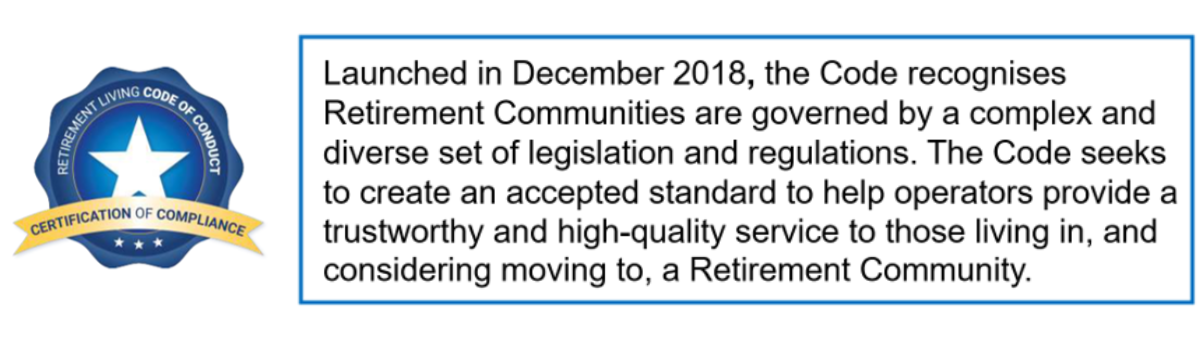
Adoption by operators was respectable, but universal participation and commitment never came.
Governments are now mandating many of those same principles through regulation.
Earlier this year, at the Property Council’s Retirement Village Outlook event in Melbourne, then-Minister for Consumer Affairs Nick Staikos flagged that Victorian operators could expect a mandatory Code of Practice.
The detail has now been released.
Read through the draft and a familiar theme emerges. Respect. Transparency. Governance. Resident engagement. Staff capability. Complaint management. Professional behaviour. These are the very principles the industry’s own Code has championed for years.
The difference is that operators won’t be asked to opt in. They will be required to comply.
And in some areas, it goes further – introducing explicit obligations around identifying and responding to elder abuse, together with mandatory staff training designed to lift capability consistently across the sector.
A $20 million VIC price tag
For years, retirement village legislation regulated transactions.
Now, it is regulating behaviour.
Not just what operators do, but how they do it. Professional conduct is no longer a point of difference. It is becoming a compliance obligation.
The Victorian Government’s own Regulatory Impact Statement estimates the proposed Code will cost operators nearly $19.5 million over the next decade. There are 432 retirement villages in Victoria, so this figure is just $4,500 a year.
The real compliance cost will be two to three times this amount. The RIS also acknowledges many of those costs are likely to be passed on to residents, but will it? Think training and back office and board compliance reporting.
The next step for Victorian operators is consultation, which will likely look at whether this is a price worth paying.
Other states will tell you it is. NSW introduced a Rules of Conduct in 2019. It included a requirement for elder abuse strategies and training and development. They were the first state to do so.
South Australia has recently followed suit.
The irony? Many of the principles now being written into regulation originated with the industry itself.
The opportunity to lead has now become an obligation to comply – at an additional cost.


