
Aged care operators being investigated by regulator


- HELF investigations: Commission targets providers over fee practices
- Mandatory services: Essential care cannot attract HELF charges
- Transition deadline: HELF changes required by 31 October 2026
- Regulatory scrutiny: Non-compliant providers risk refunds and enforcement
Residential aged care providers are facing regulatory scrutiny over the Government’s new resident charges for additional services.
The Aged Care Quality and Safety Commission has launched investigations into several residential aged care providers amid concerns some may be charging Higher Everyday Living Fees (HELF) that are inconsistent with the rules and the rights of older people.
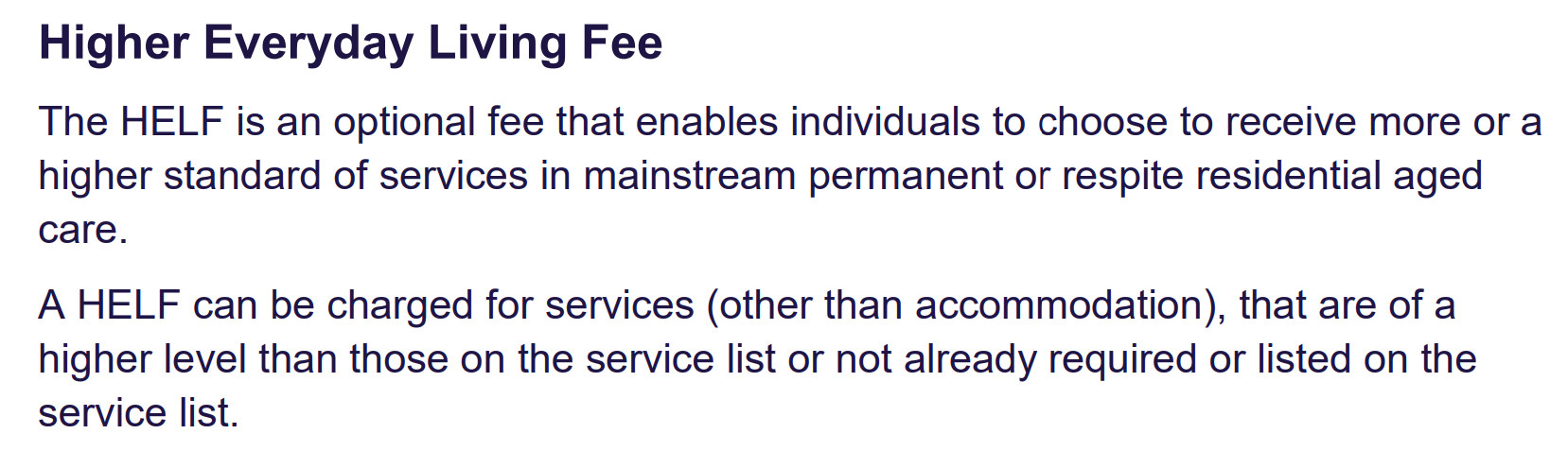
HELF fees were part of the new Aged Care Act on 1 November 2025. They give operators the option to deliver services beyond a prescribed list of essential services, for additional fees. With no margin available on care, HELF is a lever available to operators to ensure viability.
The ACQSC has listed examples of practices under investigation:
- A provider removed televisions from vacant rooms with the intention of charging new residents to have a television installed;
- A provider who removed basic services and attempted to charge residents to have them reinstated;
- A provider who was planning to charge residents for performances given by volunteers at the service for free; and
- Providers charging HELF for meals that were previously standard offering.
Expect strong regulatory action
The ACQSC said it is prepared to take strong regulatory action where breaches occur, including requiring providers to reinstate services that have been withdrawn and issue refunds where fees have been charged incorrectly.

Aged Care Quality and Safety Commissioner Liz Hefren-Webb said HELF charges are optional, and “not an opportunity for providers to charge residents for services that should already be delivered as part of quality aged care”.
She highlighted particular concern about the use of HELF related to meals.
“The Standards are crystal clear that providers must offer meals that meet the nutritional needs, goals and preferences of residents. This is not optional. This is not an additional service. This is a minimum mandatory requirement,” she said.
“Older people and their families must have transparency, fairness and confidence that they are only being asked to pay for genuine additional services they have freely chosen and can use.”
HELF misuse
The ACQSC said the investigations will focus on services where HELF fees have been charged that:
- should be delivered as part of standard residential aged care,
- residents will not use, or
- are presented as though they are mandatory.
The Commissioner encouraged older people and their supporters to raise their concerns if they think their HELF charges are incorrect.
Proceed, but with caution
Aged care operators around the country are transitioning residents from the former extra and additional service fee arrangements to HELF which must be completed by 31 October 2026. The change involves conversations with every aged care resident and their supporters, a significant undertaking.
HELF presents operators with a legitimate opportunity to improve returns at a time when sector earnings are under pressure and providers are being called on to invest in much-needed new residential aged care beds.


