
Australia wants ageing at home – but dementia could break the model


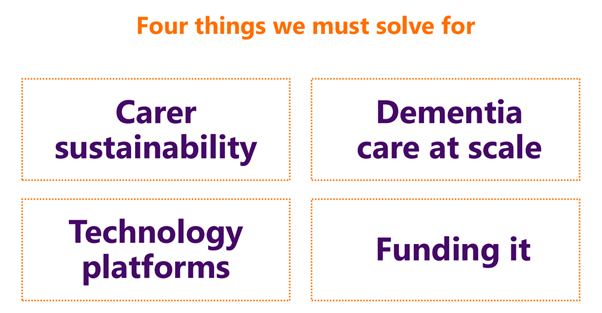
HammondCare CEO Andrew Thorburn says dementia is becoming the defining challenge of ageing – and solving it will require new technology, new partnerships and an entirely different approach to care at home.
Australia is building an aged care system around ageing at home – but according to HammondCare CEO Andrew Thorburn (pictured top), dementia could become the pressure point that determines whether the model survives.
Speaking at the 2026 LEADERS SUMMIT in March, Andrew argued dementia should no longer sit on the edge of aged care policy discussions.
“It needs to come up,” he said, warning the number of Australians living with dementia will rise from around 450,000 to 550,000 over the next decade, with two-thirds remaining in the community.
The warning also comes as the sector increasingly confronts the impact dementia is already having on residential aged care.
As Chris Baynes writes elsewhere in this edition of SATURDAY, “the only dark space on the horizon is dementia”, with dementia-related occupancy in residential aged care often stretching from two years to as long as 10 years, while around half of residents already display some level of cognitive decline.
But unlike many discussions around dementia, Andrew’s focus was not just on the challenge – it was on the operating model required to solve it.
“How do we scale care, clinical care, dementia care in homes like that all the way around Australia?” he asked.
The next operating model
His answer starts with technology.
Andrew described technology platforms as the “crucial” enabler that will allow providers to deliver dementia care consistently at scale across thousands of homes.
He pointed to virtual command centres, hub-and-spoke care models, AI-enabled systems and emerging platforms from providers including Workday and Salesforce as part of the next phase of home care delivery.
But the second part of the solution is partnerships.
Andrew outlined new models where specialist dementia capability could effectively plug into existing retirement villages, home care providers and aged care campuses – see the breakout box below.
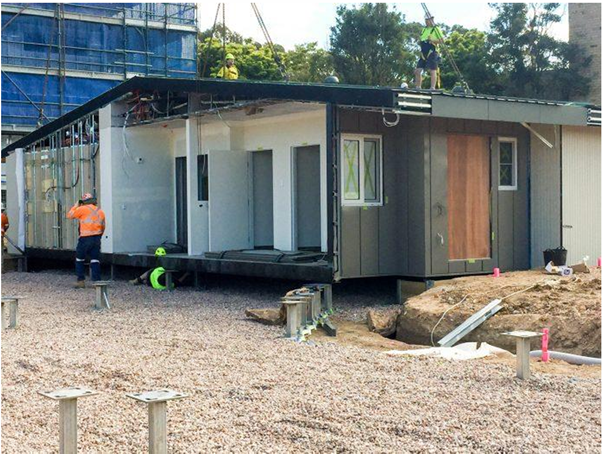
He also flagged modular dementia cottages (pictured below) and specialist operational partnerships designed to repurpose under-used aged care spaces faster and more efficiently.
Underpinning all of Andrew’s thinking was a blunt financial reality.
“The pool of government funding… is fixed,” he said.
That means the future of dementia care, he argued, will depend less on waiting for more funding – and more on whether providers can redesign care delivery itself.
Not a member and want to keep reading SATURDAY? Click here to access the 30 day free trial.


