
Home care is becoming a hospital system – but the workforce isn’t there


Providers are being pushed toward higher-acuity clinical care at home just as the sector runs out of the nurses needed to deliver it.
Support at Home may have dominated the sector’s attention for the past year – but another pressure point is rapidly emerging underneath it.
Home care is no longer just becoming bigger – it is becoming more clinical.
Experts have told SATURDAY and the 2026 LEADERS SUMMIT that the sector does not have the workforce capability required to safely deliver the level of in-home clinical care that is coming.
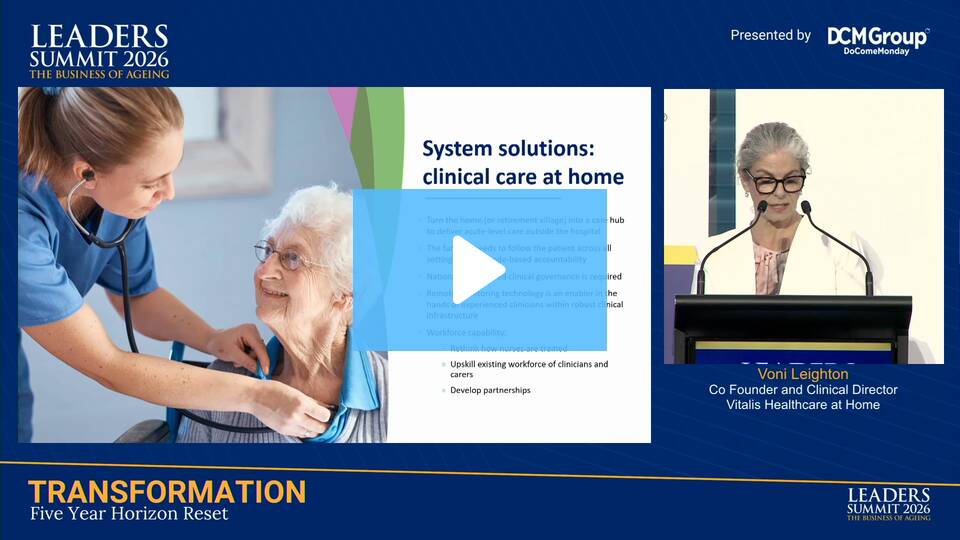
Enkindle Consulting founding partner Jennene Buckley said providers were still consumed by stabilising the “bloody mess” of Support at Home implementation – but warned many organisations were ignoring the larger issue reshaping the market.
“The home care organisations across the country and you really be honest about your current model, it will not fit,” Jennene said.
“We are certainly not home health providers.”
Jennene warned the sector does not yet have enough clinicians with acute-care capability to safely manage the wave of higher-acuity clients expected over the next decade.
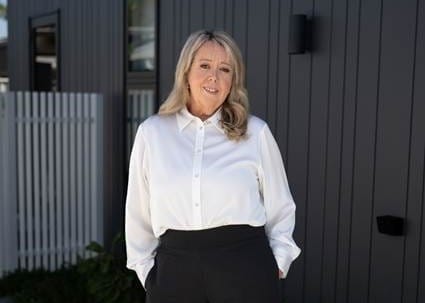
The Department of Health, Disability and Ageing’s own Nursing Supply and Demand Study 2023-2035 projected an undersupply of 17,551 FTE nurses in residential aged care by 2035 – not counting demand in home care.
“This is an opportunity,” she said.
“But providers will have to decide – do you want to remain a social care provider, or become a home health provider?”
The workforce gap is already here
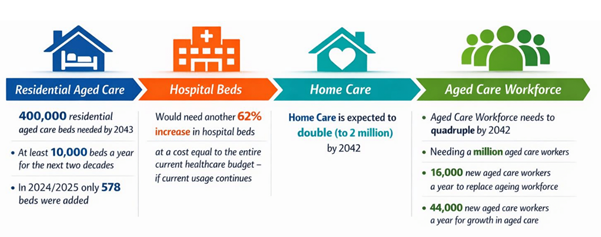
Hospital in the Home provider Vitalis Healthcare already employs ICU, emergency and acute-care trained nurses to deliver services including IV therapies, rehabilitation, palliative care and hospital substitution programs in the home.
But co-founder Voni Leighton (pictured top) warned demand is rising far faster than workforce capability.
Asked whether the sector could meet the expected surge in demand over the next 12 months, her answer was blunt: “No, we won’t.”
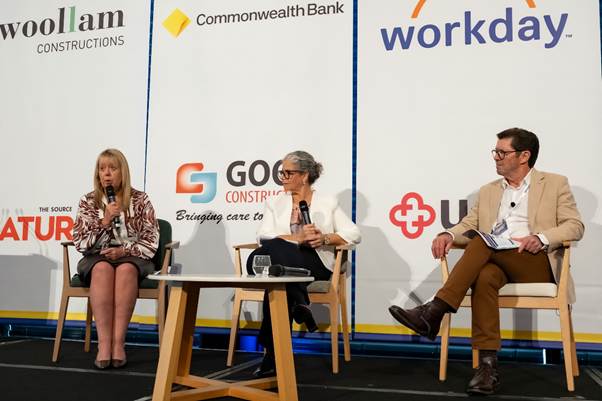
Voni said the sector would need to rapidly lift clinical capability, redesign workforce models and rethink scope of practice if older Australians are to remain safely at home.
“We need to teach them how to recognise deteriorating patients,” she said.
“We need to start doing that now before the surge really hits us.”
The conversation also reinforced a wider theme emerging across this edition of SATURDAY: that home care’s future will likely rely on hub-and-spoke clinical partnerships, virtual care and AI-enabled support models to expand workforce capacity as demand outpaces the supply of highly trained clinicians.
Not a member and want to keep reading SATURDAY? Click here to access the 30 day free trial.


