
Support at Home transitions to Clinical Care at Home – for the haves


Six months into the new Aged Care Act, and the shakeup is clear. The bread and butter daily living services will no longer underwrite the traditional home care business model.
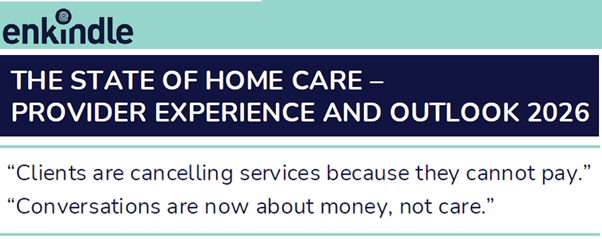
Customers, including pensioners, are voting with their wallets and are not taking up Support at Home services like cleaning, cooking and companionship. If they have to pay (co-contribute), they don’t want the elevated prices the regulated operators have to charge to just break even, let alone make a profit.
The customer is already stating they will preserve their package cash for clinical needs, which they don’t have to co-contribute.
Jennene Buckley (pictured above) just released her Enkindle Outlook Report 2026: The Reality of Reform for Home Careg Home which surveyed 300 Support at Home providers. It confirms clients and operators are in a financial and support downward spiral.
This is a game changer for home care operators and Australia’s social fabric. If daily living is not being provided by the Government, who will? Answer: either no one, the family or the black, unregulated economy.
The traditional home care providers have a workforce to deliver these services. If the customers say ‘no’, that workforce will have to be let go. And their business will be unviable.
The irony is that same laid-off workforce will go back to the same client and offer their services for tax-free cash in the hand and without the Government required regulatory oversight. The worker will earn more.
If it is family who steps in, this will seriously dislocate family units that are accustomed to two incomes. The sandwich generation will be under greater pressure.

A growing divide between the haves and have-nots
At the same time, the current and future customer knows there are either no aged care beds available when they may want them, or they simply don’t want to move into an aged care home.
For these reasons, those 45% with cash, being typical Baby Boomers, will increasingly pay for support in the home, whether it is daily services or care itself. Remember, 45% of all people over 75 live alone and they are accustomed to outsourcing their cleaning, food delivery and social connections.
They will be ‘the haves’ who will have a better-quality late ageing life.
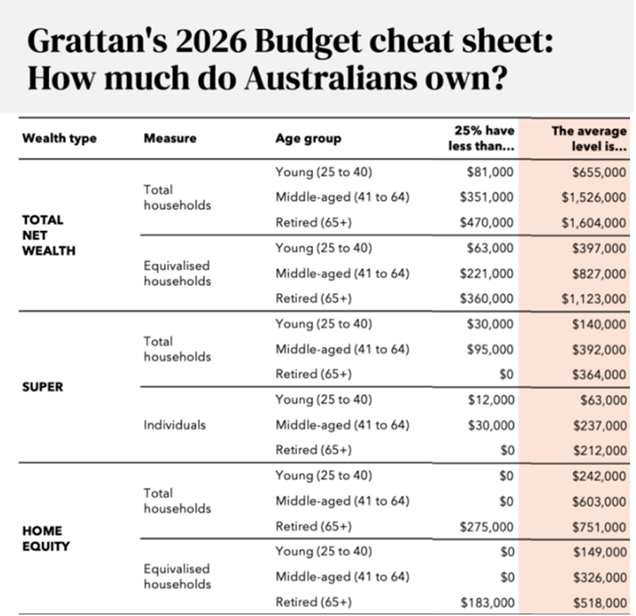
40% of this aged cohort however have little cash and equity to call on (see the Grattan’s figures below); will the system pivot and support them? This is a question our society will have to ask. Government will likely have to foot the bill.
Government pressure and rising costs
To do this, the Government (with the aid of technology) will increasingly demand results from Support at Home providers. Is the money well spent? Are you achieving at least stability in acuity? If yes, it is likely you will be rewarded with extra cash, especially if you achieve reablement. If not, you will likely be penalised.
The numbers and the consequences are staggering. Today, approximately 200,000 people are waiting for a Support at Home (including those approved and those waiting for an assessment).
In October 2025 (seven months ago) the number of packages in the market was 328,000. By this June the Government has promised 380,000 and committed to add another 40,000 by June 2027 – when the first Baby Boomers hit 82 and prime Support at Home entry. Demand will double.
The average wait time for a package is around 370 days now.
If the Government was to decide to clear this 200,000 backlog, with an average package being $31,000, it needs to commit $6.2 billion (or $17 million a day) indexed to say inflation for the next 30 years, less what they can get from co-contribution.
That is to clear the current backlog and on top of the $8.7 billion allocated to current package recipients – a total of $14.7 billion.
Then we have the 75% increase in the Baby Boomers – add another $11 billion. Then add the 75% for customers that would normally transition into aged care beds, but can’t as there are no additional aged care beds. That is 75% of current bed occupancy or 150,000 people with top level acuity, say package level 5 or say $50,000 cost required. Add another $7.5 billion in home support.
That is a total additional cost of $24.7 billion a year.
Adding this to the current Support at Home spend will result in a $32 billion annual cost.
Given this is four times the current spending, it will require an extra 300% in the size of the workforce if the system doesn’t change.
Technology changes the equation
But the system will change, driven by a lot of bad news and some good news in technology.
The bad news will be the accelerating number of media stories of people dying unnoticed in their homes, the malnutrition, the bed sores that become septic, the bad actors that enter the sector to prey on the vulnerable, as history has taught us.
The customer will increasingly understand that they must make their own good ageing story and will (begrudgingly) accept they must pay for private services. The gig and cash sector will expand to fill the gap in daily living services, and the sector’s professional services will be clinical and Government-funded for all except the very wealthy ‘haves’.
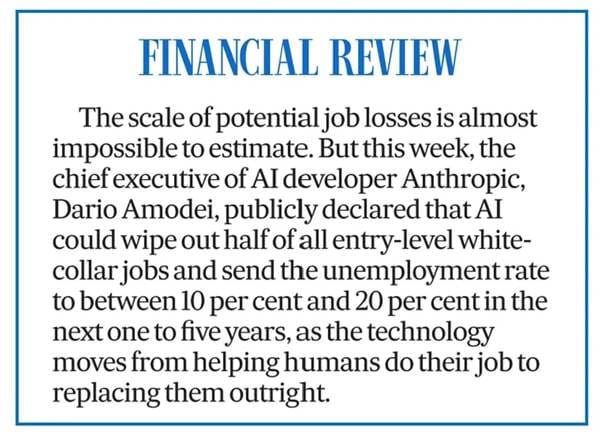
The good news (in part) is that AI will accelerate the negative impact on the white collar and knowledge worker, the predicted 10+% that will be retrenched. They will be distributed across the country, delivering a willing local workforce for the care sector in every suburb and town.
Technology will fill the rest of the gaps, with services like St. Vincent’s Health Australia, Amplar Health, Silverchain, Australian Unity and Vitalis delivering a national AI-enabled virtual health service, like Hospital in the Home (HITH). Support at Home operators will partner with these foundation services in a hub-and-spoke type model.
It is feasible that a non-clinical person will be able to deliver 90% of all case requirements in the home with this tech backing.
Clinical care at home becomes efficient
Today, the average Support at Home package is $31,000. With the efficiency of virtual health, this $31,000 will likely deliver clinical care up to the highest package levels. The customer will be able to say two years of $31,000 cash costs is a worthwhile deal if it keeps me in my home and out of aged care – so I will be a private pay customer.
Two years at a cost of $62,000 looks cheap compared to paying out a $1 million-plus RAD to go into residential care.
Behind this, the customer will realise that wellness is also a good investment, and the Government will think this as well, and start rewarding care providers who achieve reablement, and penalise operators that fail.
Chris Blake, CEO of St. Vincent’s Health, predicts the above scenario will be the case by 2030. Robert Read, CEO of Medibank’s Amplar Health, agrees.
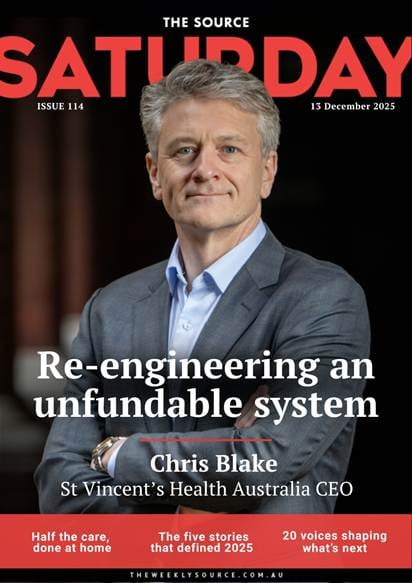
Both are investing big in technology and they will expect any partners to be tech ready to opt into their systems. They also state that there will be State and Federal revenue streams, as well as the direct consumer, and partners will need to be tech prepared to fit in. Today’s tech platforms will not; a significant question for operators.
Time to speak out?
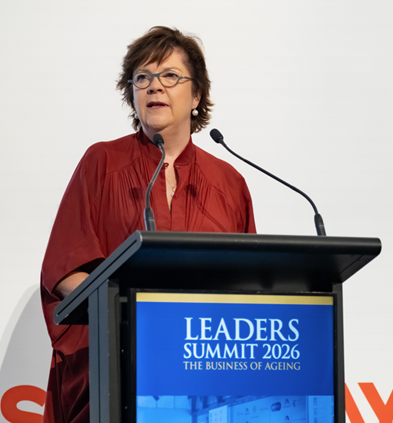
The last question for the sector is should we let the customer and the community travel down this road alone, learning these harsh realities through the media and word of mouth? Or should the sector engage in the conversation now on what will be Support at Home in the future, building an understanding?
Uniting NSW.ACT CEO Tracey Burton at the LEADERS SUMMIT strongly called on the sector to stand up, pointing out that the new Act prescribes equitable access, and the sector has a role to achieve this.
To not have this she says “Will undermine dignity and increase risk”, leading to increased hospitalisations.
Commonsense says if left to its own devices, the community conversations will be negative and this will result in bad outcomes for the sector (more regulation and costs, low staff moral etc).
All these points are challenging, against a tight timeframe. More challenging is the fact that upwards of 400,000 late ageing Australians, mostly alone, are facing bleak final years unless the sector acts now to safeguard their collective futures.
Now is the time to re-strategise and act.
Not a member and want to keep reading SATURDAY? Click here to access the 30 day free trial.


