
“We were the best in the world” – so why is aged care still losing the argument?


Former Health Minister Greg Hunt says Australia proved during COVID that it could build one of the world’s best aged care systems. Now the sector needs to get ahead of the next wave of ageing, technology and demand – and explain itself far better to the country.
Australia’s aged care sector spends a lot of time talking about pressure.
But according to former Federal Health Minister Greg Hunt, it should also start talking about success.
Speaking at DCM Group’s Conversations at the Wharf executive lunch presented by Lumin in Melbourne last month, Greg argued Australia had already proven during COVID-19 that it could deliver one of the best aged care and health responses in the world.
“The world lost an average 1.6 years of life expectancy,” he said.
“The United States lost two years of life expectancy, and Australia went up 0.2 years.”
For Greg, that outcome was significant because it showed the Australian system was far stronger than many people realised – even while operating through the pandemic, workforce shortages, reform and financial strain.
But he warned the sector cannot afford to wait for the next crisis before explaining its value again – particularly as ageing demand continues to place growing pressure on the Federal health and aged care budget. See below.
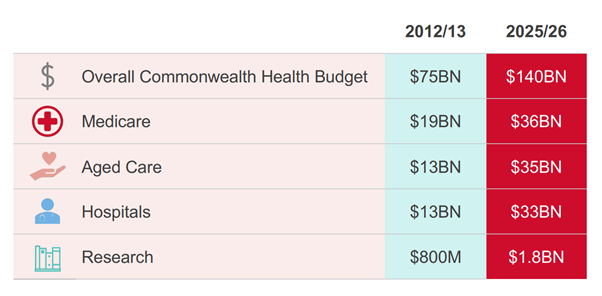
“The fundamental, inescapable trend in Australia is 125,000 people a year entering the over 65 cohort,” Greg said.
That demographic wave, he argued, will continue driving demand for retirement living, home care, residential aged care and Hospital in the Home services for decades to come.
One voice, one story
Greg said aged care needed a coordinated national education campaign led by Ageing Australia and broadened across retirement living and care sectors.
“I feel this sector should be approaching in a single voice wherever possible,” he said.
His argument was that aged care still relies too heavily on policy language, statistics and funding submissions instead of human storytelling.
“The storytelling is about a name, a face, a person,” he said.
Greg pointed to the Juvenile Diabetes Research Foundation (JDRF) as one of the most effective advocacy organisations he encountered in Government because it connected policy to real people and built long-term political engagement.
Rather than abstract campaigns, it brought children and families directly into Parliament to explain why reform mattered.

Greg said aged care should take the same approach.
The next five-year plan
The former Minister also argued the sector needed to stop operating reform-to-reform and instead push Government towards a new long-term roadmap.
“It’s five years on from the Royal Commission now,” he said.
He suggested the sector itself should develop a fresh five-year plan – led collectively by peak bodies and presented to Government as a joint national strategy for ageing, technology and care delivery.
“What you really want from them is a renewed five-year plan,” Greg said.
At the same time, he argued the sector also needed to think much further ahead.
He described three major forces already reshaping aged care: demographics, AI and remote care delivery.
That demand, combined with workforce shortages, means technology will increasingly become essential rather than optional.
“We can deliver more care to more people where they are and where they need it, rather than moving the people to the care,” Greg said.
His message to the sector was clear: Australia has already shown it can lead the world in aged care response – now it needs to start acting like it.
Not a member and want to keep reading SATURDAY? Click here to access the 30 day free trial.


