
Aged care doesn’t have a tech problem – it has a buying problem


Outdated systems, failed implementations and rising expectations are forcing providers to rethink how they buy technology – and why getting it wrong is holding back productivity.
Adventist Retirement Plus didn’t go to market looking for new technology.
It set out to fix a problem. One most providers will recognise: a patchwork quilt of outdated systems.
Across their residential aged care sites, they were running multiple nurse call systems of varying ages – some no longer supported, others installed more than a decade ago. None aligned with how care is delivered today, let alone how it will be tomorrow.
“None of them are really at the level of being able to utilise the most current solutions… around radars or bed sensors,” CEO Eric Anderson (pictured top) told SATURDAY.
That fragmentation wasn’t just an IT issue – it was a barrier to progress.

A system that doesn’t match the model of care
The problem is not unique to Adventist.
Across the sector, most nurse call systems were built for a different era of care. Alerts sound, staff respond, and only then does the real task become clear – without triage, context or prioritisation.
Systems typically treat every call and every resident the same – whether it is a fall, a toilet visit or a request for a glass of water.
The result is inefficiency and lost productivity.
Why most technology decisions fail
Adventist’s response was not to simply replace one system with another.
Instead, it ran what Talius Group founder and Executive Director Graham Russell described as one of the most rigorous procurement processes he has seen in the sector – a 12-month exercise that included benchmarking five competitors, collecting both positive and negative client testimonials, and running a live pilot before any board decision.

“I’ve never had an organisation do so much due diligence,” he said.
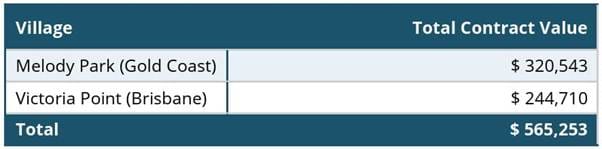
That process ultimately led Adventist to partner with Talius starting with two sites – but only after running a live pilot and proving the system worked in its own environment.
Importantly, the decision was not left to procurement alone. Clinical, IT and operational leaders were all involved – reflecting the reality that technology now sits at the intersection of care delivery, workforce and infrastructure.
That level of scrutiny highlights a deeper issue.
Too many providers, Eric said, are still buying technology the wrong way.
“They hear the sales pitch… sign up… but without understanding the pitfalls.”
After years of failed implementations and expensive mistakes, the sector is becoming more cautious – and more demanding.
From product to platform
Adventist did not just upgrade its nurse call system. The organisation adopted a full technology stack: nurse call, real-time location, sleep monitoring, voice intercom and targeted falls detection, initially deployed in high-risk rooms.
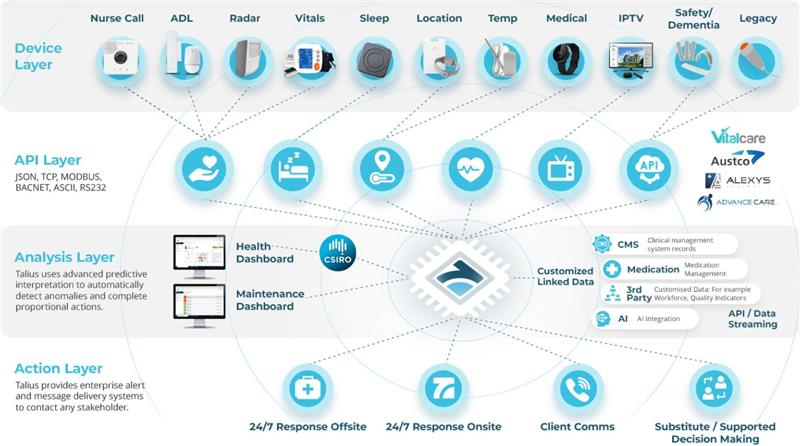
That shift reflects a broader change in how providers are thinking about technology. It’s less about standalone tools and more about platforms that bring everything together – data, alerts and communication in one place.
The goal isn’t just visibility but knowing what to do next.
Co-design, not off-the-shelf
Crucially, the pilot phase wasn’t just about proving it worked – it became a chance to refine the system.
Eric said Adventist worked with Talius to fine-tune it – reducing sensor delays, improving detection accuracy and adapting room configurations to ensure consistent performance.
“We had to ask them to make changes… to be effective in our environment,” he said.
That level of co-design is becoming a defining feature of successful implementations.
Instead of accepting off-the-shelf solutions, providers are shaping the technology around how they operate – not the other way around. And it’s changing the dynamic between provider and vendor.
“They were willing to do that to prove their product… no contract in place,” Eric said.
A problem the sector can’t ignore
The Adventist rollout may be modest to start, but the problem it tackles is not. Across aged care, outdated systems and fragmented infrastructure are quietly holding back productivity and limiting the sector’s ability to move forward.
This isn’t just about replacing technology – it’s about removing friction and building an operating model that can actually support care.
For many providers, that shift hasn’t started. But the lesson is clear: the risk is no longer moving too fast – it’s not understanding the problem well enough to move.


