
If your systems don’t work, the Act doesn’t work


In the first 120 days of the new Aged Care Act, one reality has become clear: compliance no longer rests on intent, policy or workforce alone. It depends on whether systems can capture, connect and report what is happening in real time – without adding pressure across the organisation.
That was the clear takeaway from DCM Group’s recent webinar examining early implementation of the Act, moderated by CEO Chris Baynes and featuring:
- Lahn Straney, Chief Scientific Officer, Health Metrics
- Cynthia Payne, Founder, Anchor Excellence
- Michael Wild, Chief Operating Officer, Southern Cross Care Queensland
- Lana Richards, Chief Quality Officer, Catholic Healthcare
If workforce is the engine and governance the oversight, systems are now the platform that makes both visible – or exposes where they fall short.
Where compliance is won or lost
For operators, the challenge is no longer understanding obligations. It is executing them consistently, at scale, without overloading already stretched teams.
Lahn said many providers are only now recognising how dependent the Act is on structured data.
“We’re in an environment where reporting expectations are structured and increasingly automated,” he said. “If your systems don’t support that flow of information, you create friction at every point.”

That friction shows up in duplicated entry, reconciliation across platforms and manual workarounds that consume time across clinical and operational teams.
Under the Act, inefficiency is not just a cost – it is a risk.
The fragmentation problem
A consistent theme was system fragmentation.
Many providers still operate across multiple platforms – care planning, incident management, rostering and finance – each holding part of the picture. Turning that into a single, defensible view requires manual effort.
Michael said that creates a gap between service-level reality and what is reported.
“When we talk about assurance, it’s about confidence that what’s happening at service level is reflected accurately in our reporting,” he said. “If information is being handled multiple times, the risk increases.”
Lahn was direct.
“You need a single source of truth,” he said. “When information flows from the point of care through to reporting without duplication, it strengthens confidence at every level.”
He said this is part of the challenge the eCase and MOA partnership is designed to address, by enabling data to be shared natively between care management and governance systems, rather than re-entered or reconciled across platforms.
For operators, the shift is not about adding technology. It is about simplifying it.
Embedding compliance into workflow
The Act is also forcing a rethink of how compliance sits within day-to-day work.
Lana (pictured top) said organisations are moving toward earlier visibility of issues.
“We need to know earlier if something is trending the wrong way,” she said. “Waiting for a quarterly report is no longer enough.”
That only works if systems support documentation as part of normal workflow.
Cynthia warned that poorly designed systems can undermine that goal.
“If your incident system allows closure without meaningful analysis, you’re missing the opportunity to learn,” she said. “Systems need to support reflective practice, not just tick boxes.”

In short, compliance cannot sit alongside operations – it must sit within them.
From reporting to insight
As reporting becomes more structured, systems are also becoming a source of operational insight.
Lahn said the same data used for compliance should help providers understand patterns across care, incidents and workforce.
“If we want the benefits of AI and deeper analysis, we need some level of data standardisation,” he said. “Otherwise, the insights won’t be reliable.”
For operators, that means identifying risk earlier – not after the fact, but as it emerges.
A new layer of risk
The move to structured digital reporting is also changing the risk profile.
As more resident information is captured and transmitted, cybersecurity and data integrity are becoming core governance issues.
Michael said boards are increasingly treating information governance as part of enterprise risk.
“It’s not separate from quality,” he said.
That shift reinforces the need for systems that are secure, consistent and governed appropriately.
What sustainable compliance looks like
Across the webinar, one conclusion stood out: systems will determine whether the Act is sustainable.
Providers relying on manual processes and fragmented platforms may meet requirements in the short term but will struggle as expectations deepen.
Those that reduce duplication, improve data quality and embed systems into workflow are more likely to build models that hold.
Lahn put it simply.
“Technology should support getting the documentation in easier and then make that data work harder for providers,” he said.
That is the real test – not whether systems capture information, but whether they reduce effort while increasing clarity.
The series conclusion
Across this series, a clear pattern has emerged.
Workforce determines whether care can be delivered. Governance determines whether that care is understood. And systems determine whether it can be proven – and sustained.
Under the new Act, that connection is no longer optional.
Because in a system defined by defined data and continuous oversight, the question is no longer what are you doing?
It is far simpler – and far harder to answer: can you prove it, every day?
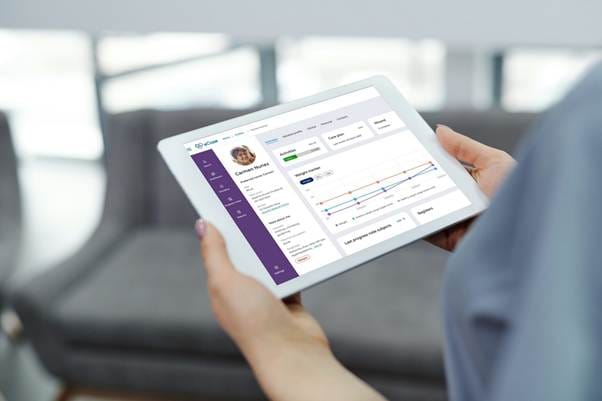
Health Metrics eCase: Built for how the Act now works
Health Metrics’ eCase platform serves as the clinical foundation, bringing together care planning, assessments and daily care management within a single, structured workflow that supports high-quality care delivery.
Complementing this, MOA provides advanced incident management, workforce oversight and reporting capabilities – enabling providers to capture, analyse and act on critical operational and risk data across the organisation.
Together, eCase and MOA reduce duplication, strengthen data integrity and create clear visibility from frontline care through to executive and board oversight.
As the Act shifts from periodic compliance to continuous performance, this connected approach – linking clinical data with governance and operational insight – is becoming essential.


