
Inspector-General calls for fundamental Support at Home changes


- Change course: Support at Home needs urgent redesign
- Prevention first: Home care delays frailty and decline
- Co-payments questioned: Low-income older people disproportionately affected
- Economic modelling: Early intervention could reduce healthcare costs
The outgoing Inspector-General of Aged Care appeared before the Senate Inquiry into Support at Home last night (24 June) as the sole witness in a one-hour hearing.
Natalie Siegal-Brown is leaving the Inspector-General role on 31 July 2026.
Siegel-Brown told the hearing "it's not too late" for the Government to "change course" with its Support at Home reforms.
Instead of supporting older Australians to "age with dignity in their own home", "delayed access" is "perversely, inevitably promoting older people's decline and likely fast tracking their entry into hospital and residential aged care at the expense of their human rights and at the expense of the economy", she said.
The scale of the "unintended consequences" of the reforms has been greater than expected, she said.
Natalie is calling on the Government to shift the settings for Support at Home to reconceive it "as an investment in prevention" of frailty and loss of independence.
Maximising the use of home care is key to solving the aged care bed shortage, she said.
"Unless Support at Home's design is recast and its value as an investment in prevention is embedded in that design, older people's ability to live independently will continue to be compromised, and the costs of acute care will continue to expand."
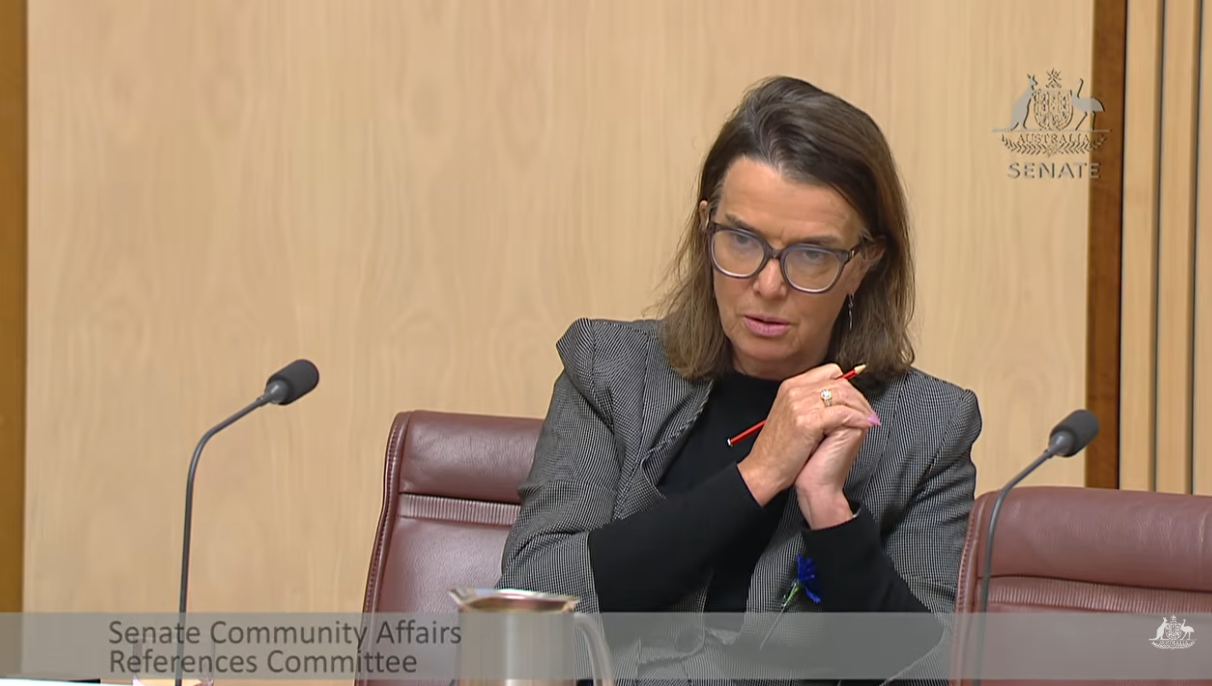
Siegel-Brown said the Inspector-General of Aged Care's office is in the final stages of economic analysis looking at what "investment upstream" in home care and prevention delivers in terms of a "downstream dividend".
Remove co-contributions for those with low means
Siegel-Brown also raised concerns about co-contributions, saying they disproportionately impact "those with the least capacity to pay" - "potentially entrenching disadvantage rather than alleviating it".
She suggested the Government conduct modelling on the removal of co-contributions for those of low means.
"That might create a beneficial effect across the rest of the aged care budget, not to mention the health care budget of keeping people at home and their decline restricted," she said.
The Inspector-General's modelling of the cost benefits of early intervention is likely to have "early numbers" in the next few weeks, with a final modelling completed by the end of the year.
The Support at Home Senate Inquiry is due to release its final report on 24 November 2026. Submissions close 31 July 2026.
You can watch the hearing here.


