
Natalie Siegel-Brown’s exit leaves a bigger question behind


Natalie Siegel-Brown’s resignation as Inspector-General of Aged Care is more than a high-profile departure.
It leaves a bigger question hanging over the sector: who now carries the argument that aged care reform is not just about more funding, but about how the system uses the money already on the table?
Over the past 16 months, Natalie became one of the few public figures willing to openly challenge the framework underneath aged care reform itself.
At the 2026 LEADERS SUMMIT, she questioned whether parts of the $40 billion aged care system were delivering value at all.
“I think there are mechanisms in place that mean we are wasting budget at the cost of people’s human rights,” she told delegates.
Upstream or overwhelmed: re-wiring the aged care budget - not beds – for real reform
That is not the kind of line you normally hear from a Government accountability office.
Importantly, her focus was not primarily on providers. It was on Government design – how funding flows, what the system rewards, and why aged care still tends to intervene only after people have already declined.
Following the money
Aged care has spent years arguing – rightly – that the sector needs more funding. With margins remaining weak and demand for home care continuing to grow, providers are under pressure.
But Natalie was asking a different question: what if the system is rewarding the wrong things?
“This is public health 101,” she said. “Investing earlier saves money.”
Investing in independence – and intervening earlier in the ageing journey – increasingly sits alongside the sector’s growing focus on productivity.
At DCM Group, Plan T discussions with operators suggest aged care could improve productivity by 20% – unlocking roughly $8 billion a year, or about $22 million a day.
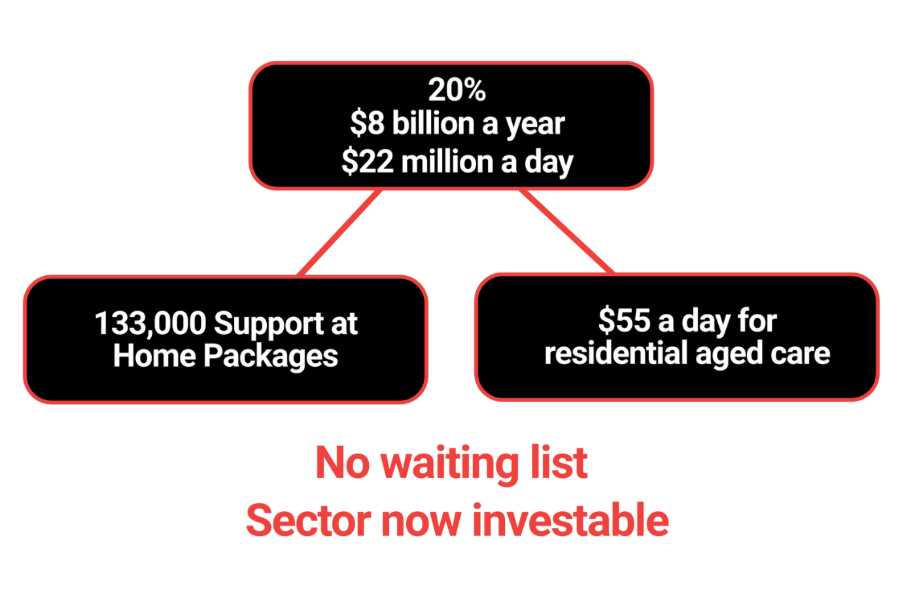
If the sector could reduce red tape, duplication and poorly designed processes, it could free up time, money and workforce capacity – while also reducing the home care waitlist and improving the investability of residential aged care.
The prevention gap
This week, Department of Health and Aged Care Secretary Blair Comley delivered a keynote address on prevention and early intervention at the Public Health Association of Australia’s Preventive Health Conference in Hobart.
His point was revealing: Governments generally do believe prevention works. The challenge is fitting it into a system where every dollar competes against immediate pressures.
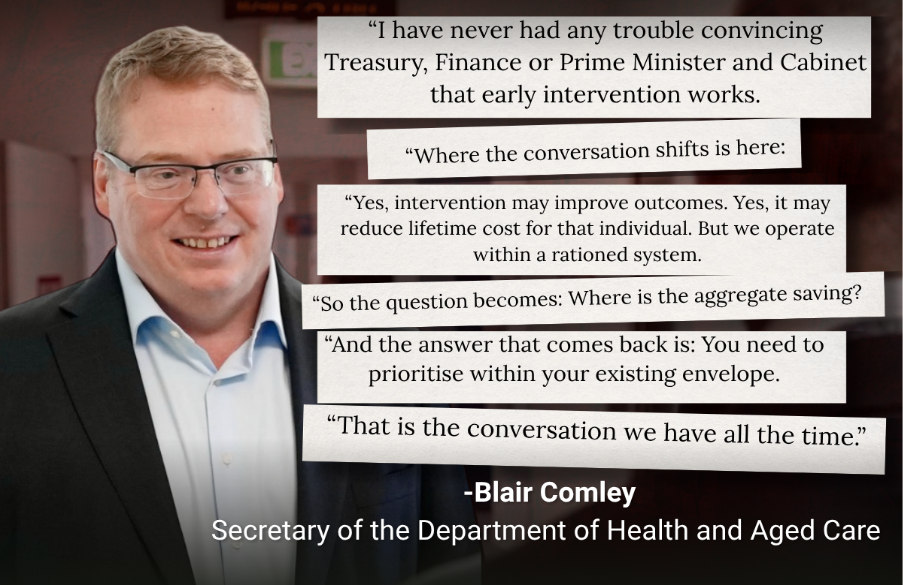
Aged care is still largely geared towards responding after decline occurs.
But even delaying entry into residential care by a few months can substantially reduce funding costs.
The harder part is building funding models and incentives around that goal.
That is why Natalie’s unfinished work feels significant.
As SATURDAY reported last month, her Office had already commenced detailed economic analysis into how aged care funding is being used and where it is failing to deliver value, with early findings expected within six to 12 months.
Keeping the pressure on
Australia is trying to meet growing demand for aged care inside systems that are already stretched.
Natalie is one of the few senior figures consistently pushing prevention, productivity and redesign into the centre of that conversation – not as a side issue, but as the main one.
Whoever replaces her inherits more than an accountability role.
They inherit the question Natalie kept pushing: not just whether aged care needs more money, but whether the system is set up to use it properly.


