
Health Department does not properly understand its own $3B CHSP program

The Australian National Audit Office has released nine recommendations after analysing the Commonwealth Home Support Program (CHSP).
The 162-page Effectiveness of the CHSP report by the Australian National Audit Office concludes the Department of Health, Disability and Ageing (DOHDA) should put better controls in place before the CHSP is rolled into Support at Home, a transition currently scheduled for "no earlier than 1 July 2027".
Costing the Commonwealth more than $3 billion annually, the CHSP is one of the Government's largest grants programs.
Rolled out from 2015 as part of the Government's 'Living Longer Living Better' reforms, the CHSP has more than 1,200 providers that deliver low-care services to about 840,000 older Australians in their home annually.
Despite the large number of clients, the Program accounts for only about 8% of total Government spending on aged care.
113,000 CHSP clients not assessed
The purpose of the audit, which Auditor-General Dr Caralee McLiesh tabled in parliament on Thursday (14 May 2026), was to determine if the CHSP is effective.
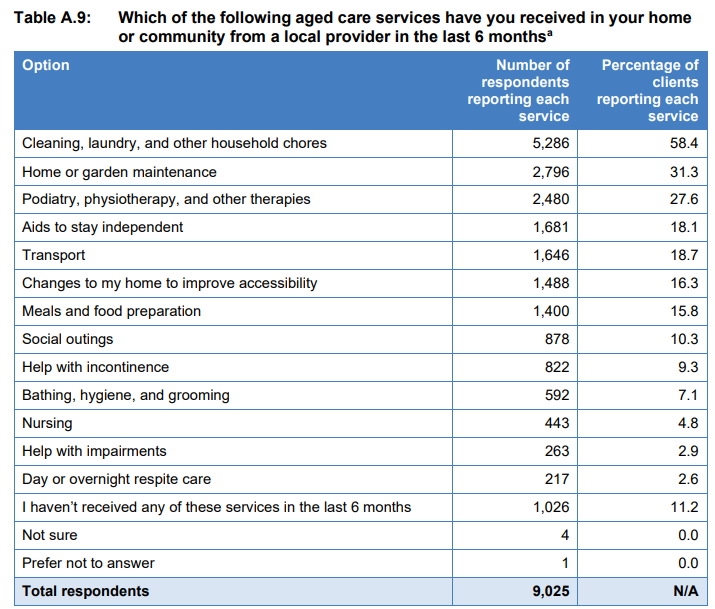
The audit involved surveys of more than 10,000 CHSP users and 495 providers, and reviewing documents from the DOHDA.
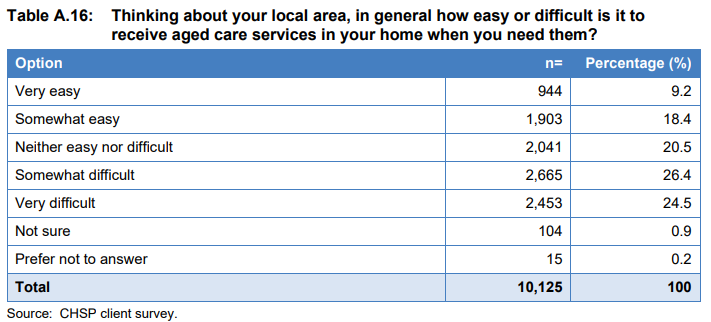
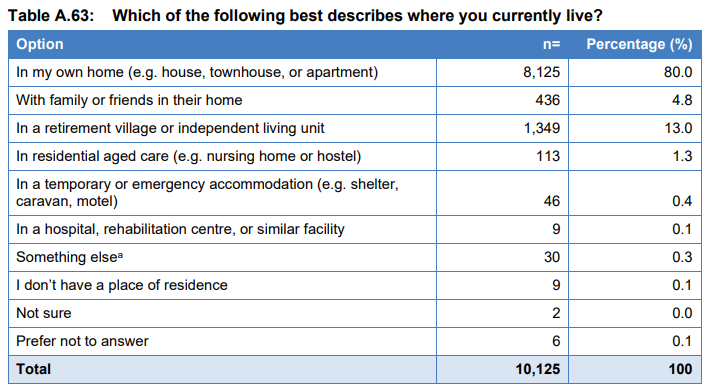
The audit report shows household chores make up 58% of CHSP services, and 13% are delivered in retirement villages or ILUs. More than half of clients said accessing CHSP services was difficult.
The audit concluded that clients are "largely satisfied" with the services they receive through the CHSP, with nearly two-thirds saying they were satisfied with their experience.
However, the audit also found the DOHDA, which has overall responsibility for the CHSP, "does not have a complete understanding of how the program is working" and "does not know the quality of care that is delivered day-to-day".
The DOHDA could not show the CHSP had achieved its objectives.
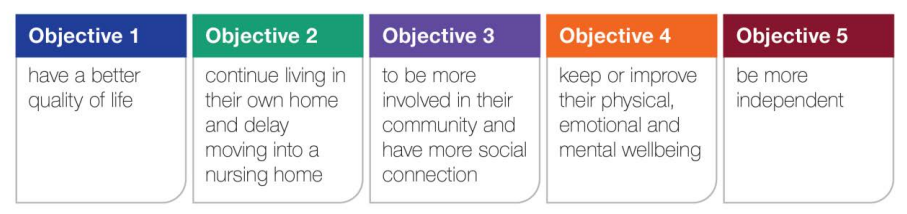
These gaps are in part because the DOHDA does not collect enough data, does not set targets, and doesn't conduct enough monitoring of the home care service.
The audit also identified that about 113,000 CHSP clients had not had an aged care assessment, although as assessment is a requirement under the new Aged Care Act to receive Government-funded aged care services.
Tim Hicks, Executive General Manager Bolton Clarke, told The Weekly SOURCE it was particularly concerning the DOHDA does not have a better way of determining supply and demand for CHSP services.
Bolton Clarke uses the CHSP to deliver high levels of nursing in Victoria, which contributes to the state's low hospital discharge rates for older patients. Bolton Clarke is able to deliver nursing for a lower cost under the CHSP than under Support at Home.
Nine recommendations
Following their findings, the Auditor-General made nine recommendations, including that the DOHDA should establish systems to monitor supply and demand for services, they should ensure all clients have had an aged care assessment, and they should establish CHSP performance measures.
The DOHDA agreed to all nine recommendations.
The Auditor-General found the DOHDA will need to "do a better job" gathering information on the CHSP, checking that information and acting on it, before the Program is merged with Support at Home.
Blair Comley, Secretary of the DOHDA, in a response to the report said future decisions about the CHSP are for Government.
A Senate Inquiry on The Transition of the CHSP to the Support at Home Program is due to report next months (on 23 June 2026) after the deadline was quietly pushed back by two months in April. The Inquiry has received 125 submissions and held two hearings. Operators have expressed concern about Support at Home, urging problems with the system's design must be fixed before the CHSP, with more than twice the number of clients, is rolled in.
Tim said Bolton Clarke wants to see grant-based funding, as under the CHSP, to continue, even if under the banner of Support at Home. They would like a more transparent process for grant allocation.
$3 billion program has one target
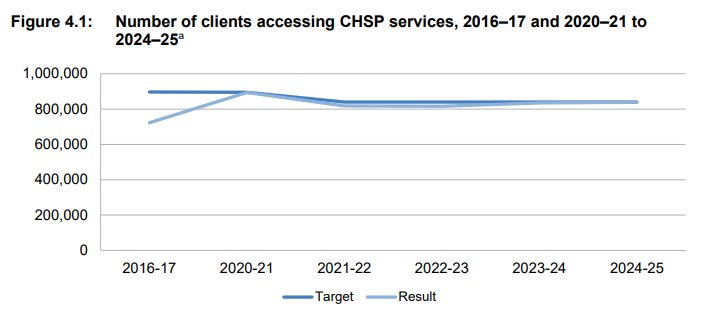
In this week's Federal Budget 2026-27, the CHSP received no additional funding from the Government. The DOHDA had a target to deliver services to 860,000 clients in 2025-26, a target that was "substantially met". An equal target was set for 2026-27. This is the only performance measure the DOHDA has for the CHSP.
You can read the audit here.


