
Butler accuses providers of “gouging”; IHACPA pushes back


Price gouging? The numbers say otherwise
- Reality check: IHACPA says prices largely reflect actual costs
- Up, not down: Six of nine recommended prices increased
- Caps paused: Providers dodge looming price controls
- No evidence: Claims of widespread profiteering fall flat
Federal Health and Ageing Minister Mark Butler said the Government would “crack down on any price gouging by providers” when he delayed price caps for Support at Home services.
Now the Independent Health and Aged Care Pricing Authority (IHACPA) has published its Support at Home Pricing Advice 2026-27, its the first for the Government’s new in-home aged care program.
What does it show?
IHACPA's 2026-2027 pricing advice (see below) suggests provider pricing is more or less spot on.
The advice includes unit prices for each service on the Support at Home service list, with each unit price intended to reflect the actual cost of delivering care.
The prices are based on the Support at Home Cost Collection 2024 and 2025, the Aged Care Financial Report 2023-24, and public consultation held in June/July 2025, which included 220 submissions.
Fair Work Commission pay rises and superannuation guarantee increases have been factored into the prices, and prices have been indexed.
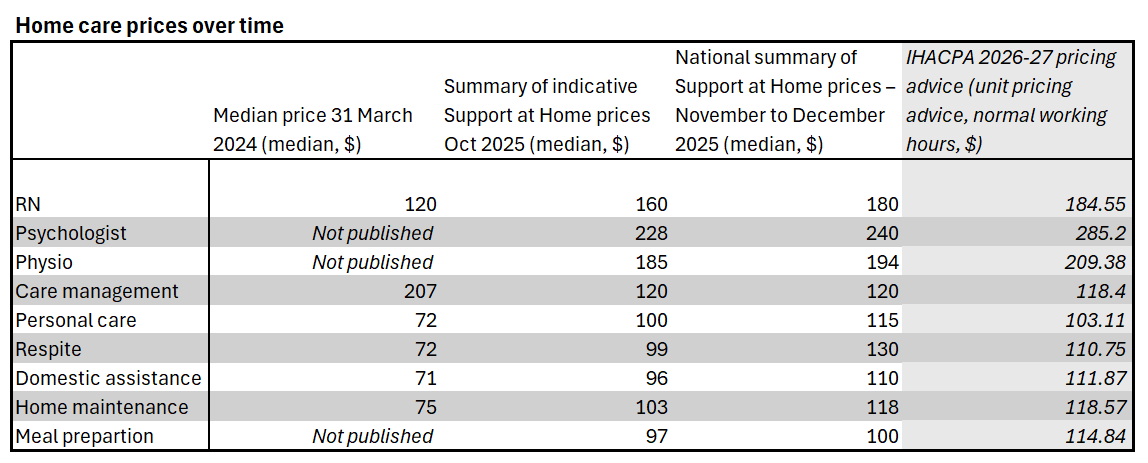
IHACPA recommended higher prices for six of the nine items in our sample, with only two – respite and personal care – lower than the mean prices the Government published earlier this month for November and December 2025, the first two months of Support at Home.
The IHACPA pricing advice numbers are significantly higher than indicative prices published last October.
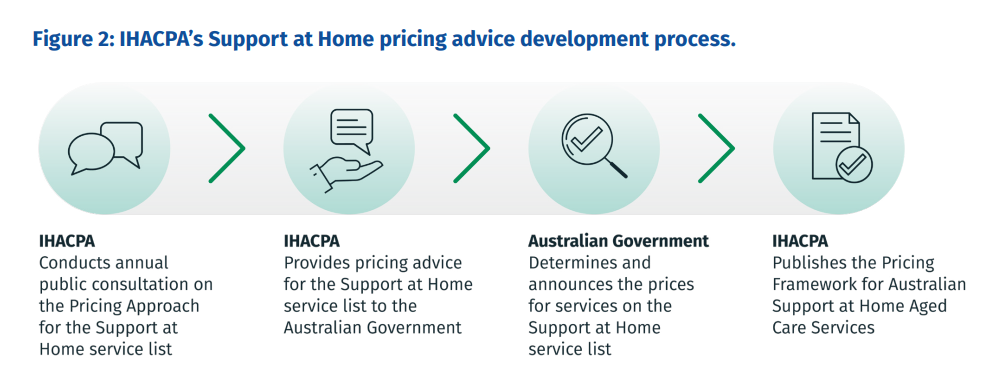
An IHACPA spokesperson told The Weekly SOURCE that the Government approved release of the Support at Home Pricing Advice to “inform the sector of the direction of pricing driven by their reported costs” giving the sector “more time to understand how their costs relate to a future pricing structure”.
IHACPA’s pricing advice would have fed into Support at Home price caps, delayed last month just six weeks before they were due to be implemented.
Operators heaved a sigh of relief, with margins already under pressure under Support at Home and no guidance provided at the time on what price cap levels would be.
StewartBrown reported that in the December 2025 quarter, care margins were insufficient to offset declining margins, particularly for administration and package management. Declining volumes were also a factor impacting pricing.

Tim Hicks, Executive General Manager Policy and External Relations at Bolton Clarke, said price setting is “impractical” in the context of continued changes to Support at Home, a situation he expects could continue.
“Support at Home has created a lot of change in home care and there is more coming as providers adapt to what they have seen so far,” he said. In terms of service prices, Tim said: “Ultimately choice of provider is also a more effective and immediate protection for older Australians than any blunt regulatory safeguard.”
IHACPA’s pricing advice shows prices are in line with costs – there is little evidence they will boost operators’ margins.
No evidence of price gouging, Minister Butler.


