
Can anyone explain these home care numbers?


The Government finally released new home care data on Sunday night. Three months late and indecipherable.
The sector has been waiting six months for an update, so naturally we jumped straight into the numbers – then we got stuck. The press release was unreadable.
It says:
“The data, covering 1 January to 31 March 2026, shows:
• A record 364,723 older Australians now have access to an ongoing Support at Home place, up 17,830 over the quarter
(We read this to mean 17,830 extra people now have a S@H place across 3 months – 1,371 each week.)
• 79,145 ongoing places were released over the quarter, at an average of 6,088 places every week
(We read this to mean 79,145 extra people now have a S@H place across 3 months – 6,088 each week.)
• 61,500 of the 83,000 places announced in September 2025 were released as at 31 March.)"
(We read this to mean 61,500 extra people now have a S@H place across 6 months – 2,365 each week.)
So, here are our questions:
- Why are ‘quarterly’ figures released after six months?
- How many new older Australians actually received a Support at Home package last quarter?
- Or did package upgrades for existing recipients get mixed in with new client packages?
If you can work it out from those figures, you’re doing better than us.
As caring Australians, we want to know how many older, frail people we as a country are supporting.
As operators of businesses planning cash flow and workforce, we want to know what the playing field is that we are shackled to.
While we are on it, neither the release nor the report mentions Interim Packages – now called the Minimum Service Offering (MSO). Senate Estimates hearing last December heard that 93% of released packages were interim allocations.
MSO means clients and operators get just 60% of the package funding, which has never been explained, but we assume it's so the government can say it has released more packages with the same money.
There was no discussion of the complexity and cost it creates for operators, and confusion with clients.
Nor is there much discussion that the MSO is designed to be 60% payment for ten weeks while in reality reports say it is closer to 17 weeks before full funding flows.
Wait times now baked into the system
But the bigger story may not be the numbers at all.
This week, we also learned that waiting times have effectively been written into the Aged Care Rules, with package releases linked to target wait times set by the System Governor i.e. the Department.
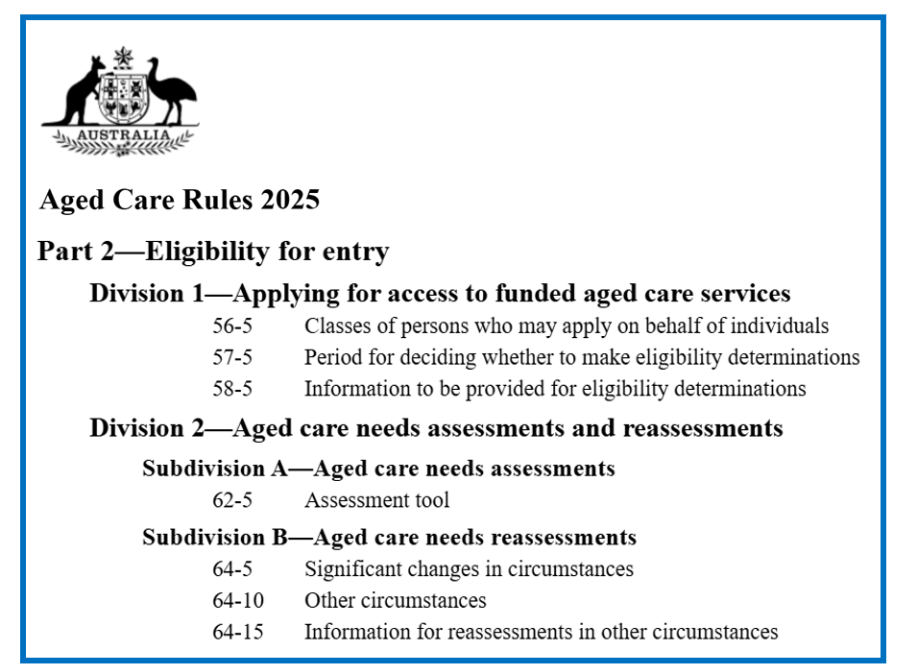
For years, the conversation has been about reducing the waiting list. Remember when the goal was to clear the backlog? Remember the legislation was to be rights based – the right to receive aged care. Remember Ian Yates banging on that no wait time should be longer than 30 days.
Now it seems we’re accepting that the wait queue is part of the system.
The new rules have a formula. This is how consulting group Pride Aged Living explained it to us:
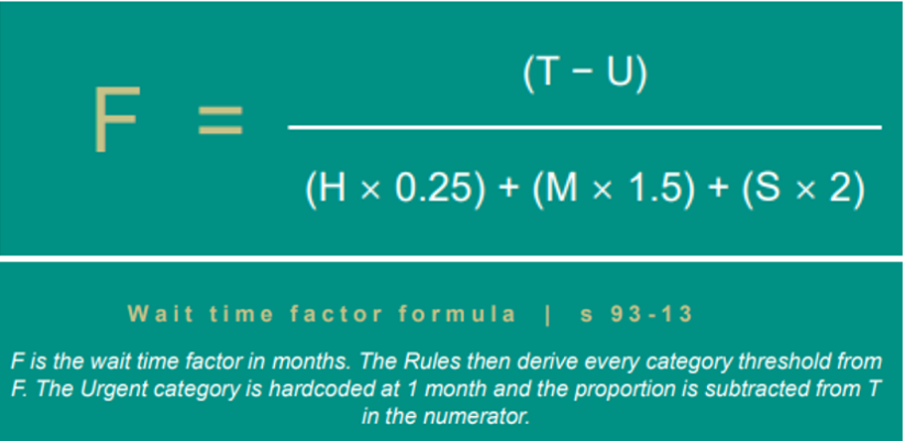
For more detail see Caroline Egan’s separate article, but the net result is this formula is supposed to calculate which levels of urgency wait for how long.
The current target for the standard (not that urgent) client is about eight months. But 10 to 14 months is the real figure say operators we speak to.
And it won’t get better thanks to compounding, meaning the funnel of people not in the system today are being topped up by new people every day.
Remember, 2027 is the year when the first baby boomer hits age 82 - the average entry age for home care. And there are 75% more baby boomers than pre baby boomers.
The fact is there are still more than 100,000 people waiting for a package. Add the almost 99,000 people waiting for an assessment and you’re getting close to 200,000 Australians still somewhere in the queue.
The maths don’t work. Just like the maths in the press release last Sunday night.


