
National survey: Support at Home confuses retirement village residents


- Survey findings: 2,451 residents report widespread Support at Home confusion
- Long waits: Many waited months for assessment, approval and services
- Service gaps: Residents report unmet needs and higher out-of-pocket costs
- RVRA warning: System is falling short for older Australians
The NSW Retirement Village Residents Association (RVRA) has released the results of a national survey of retirement village residents.
The survey, completed in consultation with retirement village resident associations across Australia, attracted 2,451 responses and generated more than 8,800 written comments on the Federal Government’s new Support at Home program.
The findings show 30% of village respondents waited seven months or more for assessment by My Aged Care, while 24% waited seven months or more for approval after assessment.
A further 28% waited three months or more to receive services from a provider. The Weekly SOURCE reported last month that 200,000 older Australians are still waiting for aged care despite increasing Package numbers and the provision of interim funding.

RVRA President Roger Pallant said the findings show a serious gap between the intent of the program and the experience of many residents.
“Residents want Support at Home to succeed. They want to remain independent, and they value the support that helps them do that. But too many are telling us they are waiting months, struggling to understand the system, and going without help when they need it,” Roger said.
Many older Australians in retirement villages are struggling to understand how to access services, what they will cost and whether they are eligible. Many of these seniors live alone. The survey found:
- 37% of village residents rated their overall understanding of Support at Home as poor or very poor;
- 46% found it moderately to extremely stressful;
- 44% found it moderately to extremely confusing; and
- 30% needed help from family or friends to apply.
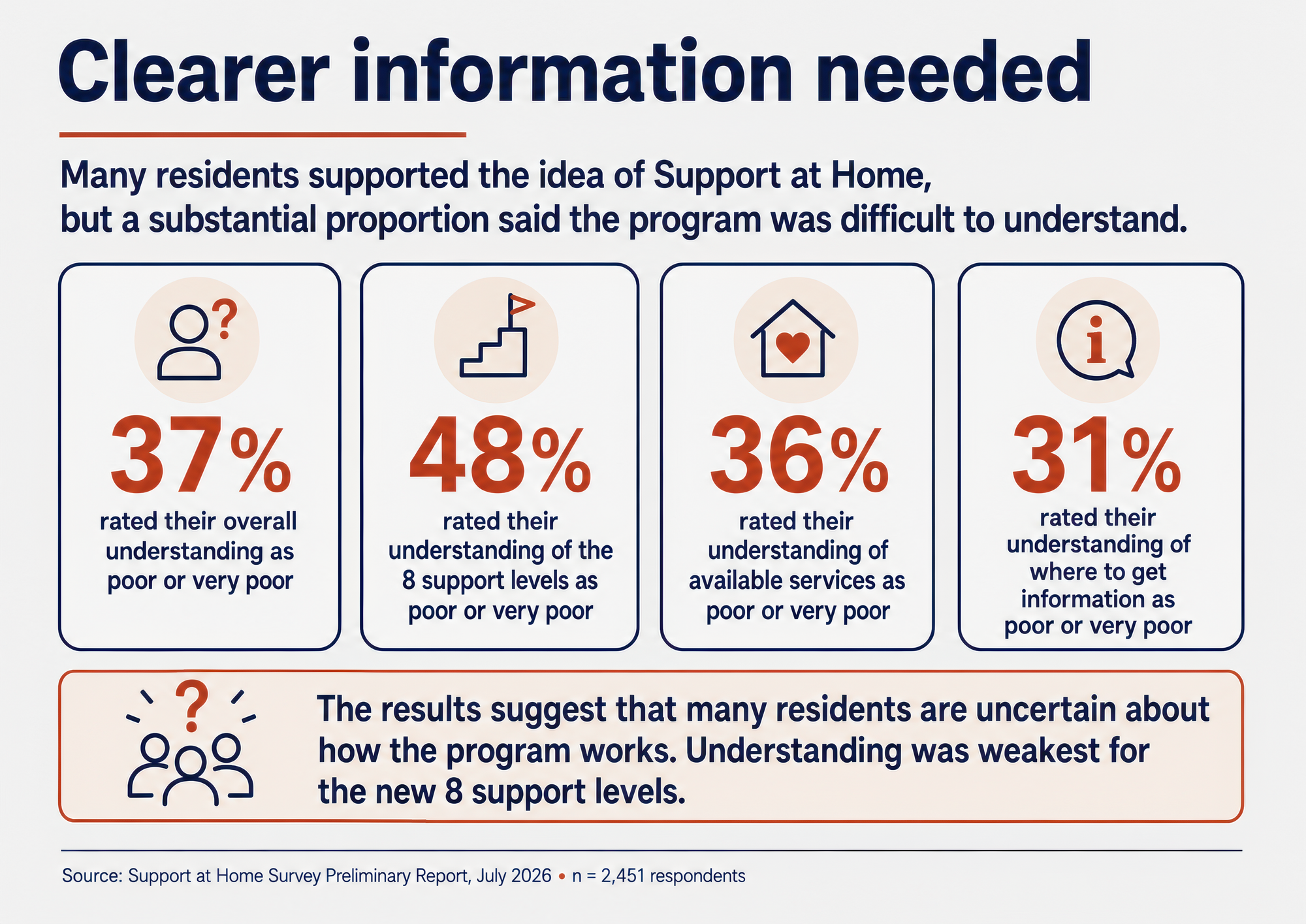
The survey also found that service gaps and costs are affecting village residents:
- 24% said they could not obtain all the services they required;
- 26% said there were services they needed that were unavailable from their provider, and
- 27% paid privately for some services.
Affordability also emerged as a recurring issue. Some residents reported increased out-of-pocket costs under the new arrangements, with others saying they had reduced or stopped services because they could no longer afford them.
Village residents who had transitioned from the previous Home Care Package program also reported dissatisfaction with the information provided during the changeover, with some saying they felt worse off under the new system.
“Support at Home must be judged by how it works in real life,” Roger said.
“If older people cannot understand the system, cannot get timely assessments, cannot find available providers, or have to pay privately for essential services, then the system is not yet meeting its promise.”


