
How ECH halved its morning scheduling chaos with Gadali's AI


- Faster scheduling: Morning rescheduling time has been cut by 50%
- Time saved: ECH has recovered around 15 hours each week
- Human-led AI: Schedulers remain in control of every decision
- Better matching: AI recommends workers based on skills, location and continuity of care
Finding replacement care workers when staff call in sick is one of home care’s biggest operational headaches.
For South Australian provider ECH, managing around 800 care workers supporting 4,500 clients, those last-minute roster changes once consumed hours every morning.
Now, an AI-powered scheduling tool developed by Indigenous technology company Gadali has cut that disruption time in half.
The platform, called Schedtris, analyses workforce and client data to recommend the best replacement worker based on factors including qualifications, continuity of care, client preferences, location and availability.
Rather than replacing schedulers, the technology has been designed to support them.
“It’s human in the loop,” Gadali founder Dustin McClung told The Weekly SOURCE.
“We’re not going in and letting AI take over people’s jobs. What we’re trying to do is reduce the administrative burden that’s pulling people away from care.”
ECH said the system has reduced morning rescheduling time by 50%, cutting a process that previously took around two hours to less than one hour.
The provider has also recovered around 15 hours each week previously spent manually managing last-minute changes.
Reducing the admin burden
Dustin said the platform does more than simply find an available worker.
It considers around 15 data points, including clinical competencies, travel times and whether a worker has previously supported a client, helping maintain continuity of care while reducing the burden on scheduling teams.
The solution was originally developed through a Microsoft AI Innovation Lab after aged care providers identified last-minute scheduling as one of the sector’s biggest operational challenges.
While Gadali is initially focused on home care, Dustin said the technology could also be applied across residential aged care, disability services and other industries where workers with specialised skills need to be matched to clients at short notice.
“The more companies that we can help reduce that amount of admin work so they can spend more time with their clients or patients, that’s a win for everybody,” he said.
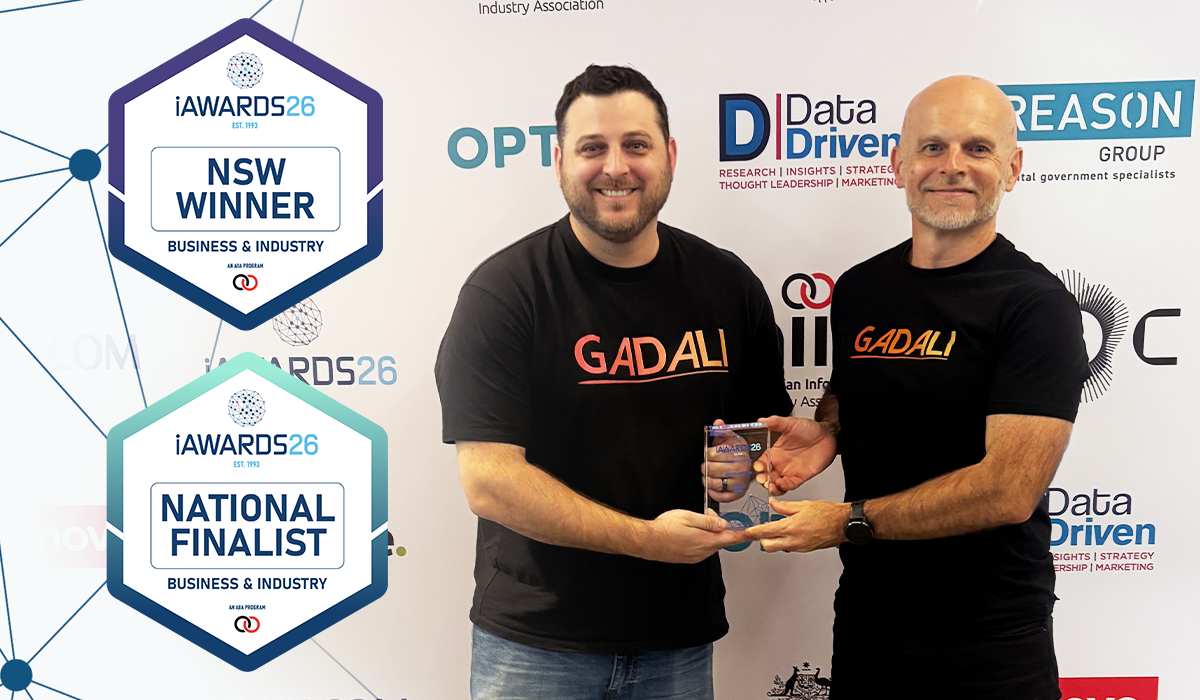
Gadali recently won the Business & Industry category at the NSW iAwards for Schedtris, qualifying as a 2026 National iAwards Finalist.


